Why Choose Foil Roll for Global Packaging Needs?
In practical packaging work, material choice affects protection, efficiency, and customer trust. Foil Roll remains a strong option for products facing moisture, oxygen, light, or temperature changes. Its reflective surface can help reduce heat exposure during storage and transport. Its compact form also supports high-speed converting and customized package sizes.
The right structure depends on the product. Pharmaceutical applications may require controlled thickness, clean surfaces, and verified barrier performance. Food manufacturers often examine seal strength, pinholes, migration data, and printing quality. Industrial users may prioritize durability, flexibility, and resistance to chemicals. These decisions should follow documented testing, not attractive claims. A qualified supplier should provide technical data, traceability, and consistent batch control.
Global packaging needs also demand careful attention to regional standards and recycling systems. Foil can protect products with very little material, yet its recovery depends on the final package design. Thin foil laminates may perform well but can be difficult to separate. That limitation deserves honest discussion. No material solves every packaging problem. Not by itself.
A reliable selection process compares barrier requirements, forming behavior, sealing conditions, logistics, and total cost. It also considers production waste and the customer’s disposal environment. Experienced teams should test samples under realistic humidity, pressure, and transport conditions. Small defects can become expensive failures. Foil Roll is valuable when its technical strengths match the application, the supplier is accountable, and performance is measured from production line to end use.
What Foil Roll Is and How It Functions in Packaging
Why Choose Foil Roll for Global Packaging Needs?
What Foil Roll Is and How It Functions in Packaging
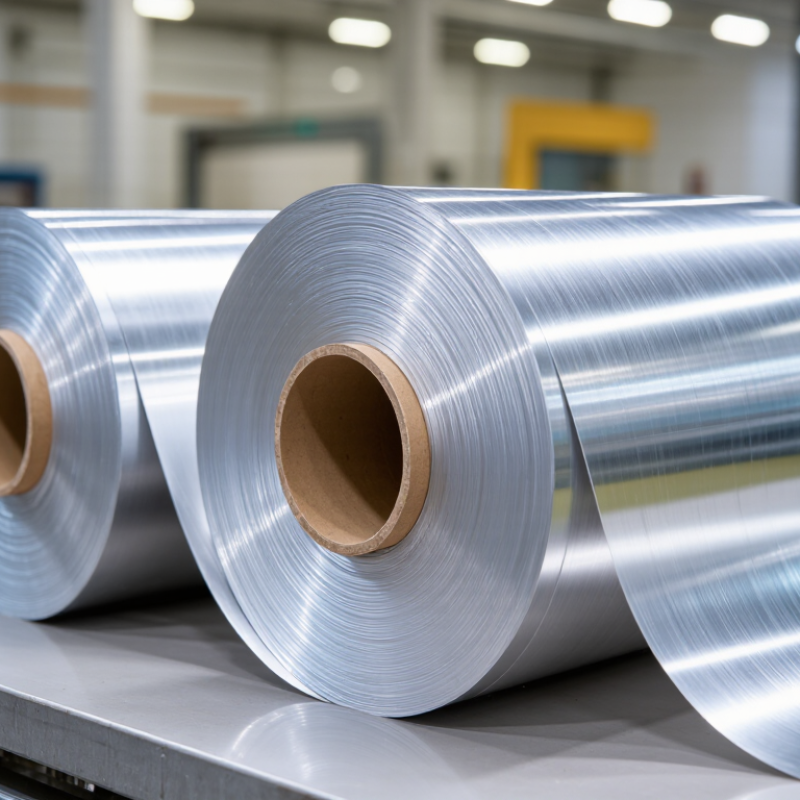
Foil roll is a continuous sheet of aluminium supplied in large industrial coils. Converters slit, laminate, print, or form it for different packaging structures. Its main function is barrier protection. The metal blocks light, oxygen, moisture, and many aromas. This helps protect sensitive products during storage and transport.
Thickness matters. A thinner foil can reduce material use, but it may tear during converting or filling. A thicker grade offers better puncture resistance, although it adds weight and cost. In practical packaging trials, weak seals often cause more failures than the foil itself. That detail is easy to overlook. The International Aluminium Institute reports that recycling aluminium uses roughly 5% of the energy required for primary production. However, laminated foil structures can be difficult to separate and recycle. Design decisions should consider the full package, not only the foil layer.
Tips: Specify the required barrier level before selecting thickness. Test rolls under actual humidity, temperature, and filling conditions. Check edge quality, winding tension, and seal compatibility. The FAO estimates that 14% of food is lost between harvest and retail, so reliable barrier packaging can support waste reduction. Still, foil is not automatically the best choice. Engineers should compare protection, recyclability, machine performance, and total material use.
Key Barrier Properties That Protect Packaged Products
Why Choose Foil Roll for Global Packaging Needs?
Key Barrier Properties That Protect Packaged Products
Foil roll helps protect products from moisture, oxygen, light, and unwanted odors. These barriers matter during long storage and international transport. A dry food product may lose texture when humidity enters the package. Light can also reduce color, flavor, and nutrient quality. Foil’s near-total light barrier offers dependable protection in warehouses, trucks, and retail displays. Its low oxygen transmission helps slow oxidation. This supports fresher taste and more stable product quality.
In packaging trials, seal performance often matters as much as foil thickness. Tiny pinholes, edge damage, or flex cracks can weaken protection. A suitable foil structure should match the product, filling process, and climate. Humid routes need strong moisture resistance. Products with strong aromas require reliable odor retention. Testing oxygen transmission, water vapor transmission, seal strength, and pinhole resistance improves confidence. Still, thicker foil is not automatically better. It may increase material use without solving a weak seal.
Tips: Check the full package structure, not foil alone. Review barrier test results before production. Inspect rolls for creases, dust, and edge damage. Keep storage areas clean and dry. Small defects matter.
Aluminum foil laminates provide the strongest oxygen barrier among common flexible packaging structures. The lower the oxygen transmission rate, the better the protection against oxidation, aroma loss, and product degradation. Values shown are representative industry ranges and may vary with material grade, thickness, coating, sealing quality, and package design.
Safety, Sustainability, and Regulatory Considerations
Foil roll supports global packaging when safety evidence travels with the material. Its barrier blocks light, oxygen, moisture, and many contaminants. That protection can extend shelf life and reduce avoidable food waste. Food-contact compliance still requires documented testing, not assumptions. In Europe, Regulation (EC) No. 1935/2004 requires materials to avoid harmful migration. In the United States, applicable food-contact requirements and migration testing guide market access. Do not rely on appearance alone. A clean surface proves little.
Tips: Request migration reports, alloy details, and coating specifications. Confirm temperature limits for filling, cooking, and storage. Record supplier lots and inspection results. Ask whether local recyclers accept household foil. The International Aluminium Institute reports that recycling aluminium can save up to 95% of primary-production energy. However, thin foil often escapes collection when food residue remains. A recyclable material is not always recycled. UNEP’s Global Waste Management Outlook 2024 projects municipal waste could rise from 2.3 billion tonnes in 2023 to 3.8 billion tonnes by 2050.
Export teams should check destination rules for packaging composition, labeling, and producer responsibility. Requirements can differ between neighboring markets. The EU increasingly emphasizes recyclability and packaging reduction. Several other jurisdictions use separate recovery targets. Foil laminates may improve performance, yet mixed layers can complicate recycling. That trade-off deserves honest review. In practice, the best specification balances barrier performance, verified safety, transport conditions, and realistic local recovery.