×

Top 10 Types of Painting Lines for Global Buyers?

Choosing the right Painting Line is rarely a simple matter of comparing prices. Global buyers must examine coating quality, production volume, substrate type, energy use, and local service support. A line designed for steel furniture may perform poorly on aluminum profiles or automotive components. The surface tells the truth.

This guide introduces ten practical types of painting lines used across international manufacturing markets. It considers liquid spray lines, powder coating lines, electrophoretic systems, dip coating equipment, coil coating lines, and other specialized solutions. Each type has different strengths, operating risks, and maintenance needs. Pretreatment quality remains critical. Even expensive spray equipment cannot correct weak cleaning, poor rinsing, or unstable curing temperatures.

Real purchasing decisions require more than a supplier brochure. Buyers should request production samples, coating thickness records, energy data, and references from comparable factories. Independent testing can confirm adhesion, corrosion resistance, gloss, and color consistency. Certifications matter, but they do not replace process evidence. That assumption can fail.

A reliable evaluation also includes booth airflow, oven recovery time, wastewater handling, spare-part availability, and operator training. These details affect daily output and long-term ownership costs. The cheapest quote may become expensive after repeated shutdowns. No ranking fits every factory. This overview therefore focuses on practical selection criteria, not fashionable technology. It may not answer every engineering question, but it offers a clearer starting point for responsible global sourcing.
Top 10 Types of Painting Lines for Global Buyers?

What Are Painting Lines and Why Do Global Buyers Need Them?

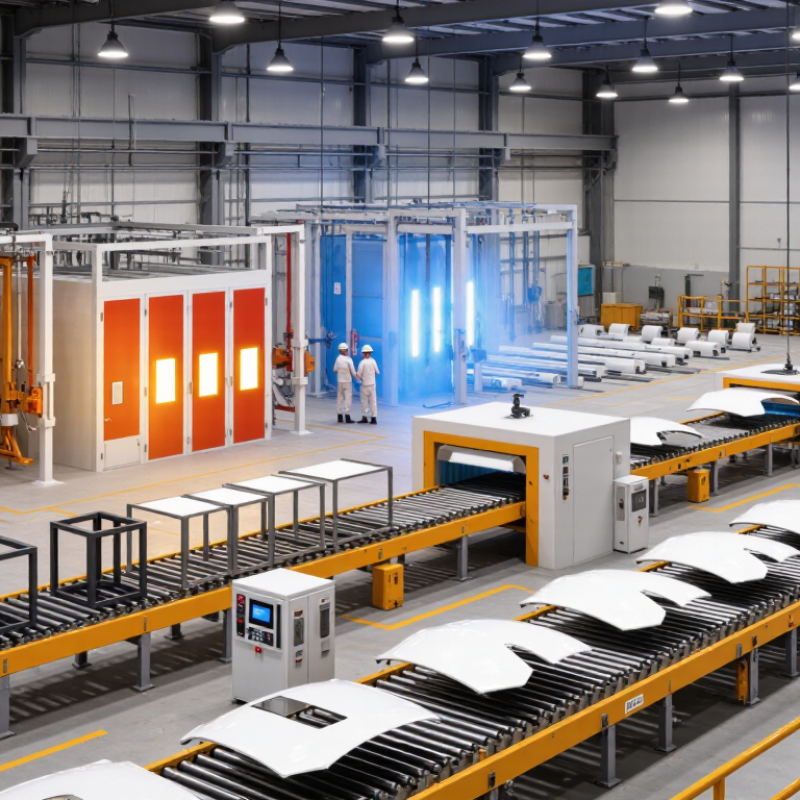
Painting lines are integrated production systems that clean, coat, cure, and inspect products. They may include conveyors, pretreatment tanks, spray booths, ovens, and quality checkpoints. Common types include liquid spray, powder coating, dip coating, electrophoretic coating, coil coating, curtain coating, roller coating, robotic spray, manual spray, and hybrid lines.

Global buyers need these systems because coating quality affects corrosion resistance, appearance, throughput, and operating cost. The Grand View Research Paints and Coatings Market report estimated the global market at about USD 206.56 billion in 2023, with continued growth expected through 2030. ISO 12944 also shows why corrosion protection requires controlled preparation and coating systems. In practical plant reviews, buyers often focus on booth speed. That can be a mistake. Energy use, wastewater treatment, color changes, floor space, and local climate matter too. A line that looks efficient may create hidden maintenance work.

Tips: Request tested samples using your actual materials. Check coating thickness, curing uniformity, transfer efficiency, and rejection rates. Ask for energy and water figures at normal production speed. Do not trust peak capacity alone. It is only one part of the decision. Remember, even a well-designed line may need adjustment after installation.

How to Classify the Ten Main Types of Painting Lines

How to Classify the Ten Main Types of Painting Lines

A practical classification begins with the coating method and production target. Manual spray painting lines suit small batches, complex parts, and frequent color changes. Automatic spray lines provide steadier coverage for large volumes. Powder coating lines apply dry powder and usually include spraying, heating, and cooling sections. Liquid dip lines immerse parts in tanks, making them useful for frames, brackets, and other shapes with hidden surfaces.

The next group includes electrophoretic, roller, coil, and curtain coating lines. Electrophoretic lines use an electrical field to create an even protective film on metal components. Roller coating lines work well with flat panels and controlled film thickness. Coil coating lines treat continuous metal strips before forming or cutting. Curtain coating lines pour a moving sheet of liquid over panels. Small defects can still appear at edges.

UV curing lines use ultraviolet energy to harden suitable coatings quickly. Hybrid lines combine two or more methods, such as dip pretreatment, automatic spraying, and thermal curing. Buyers should compare material type, part dimensions, hourly output, energy use, ventilation, and maintenance access. A reliable supplier should provide test results, process records, and realistic capacity data. In practice, classification is not perfectly rigid. One factory may use several line types for a single product family.

What Materials and Structures Define Each Painting Line Type?

Global buyers usually compare ten painting line types: manual spray, automatic spray, dip, electrophoretic, powder, roller, curtain, coil, wood-finishing, and heavy-duty protective lines. Their differences begin with material flow and line structure. Spray lines use compressed air, pumps, booths, filters, and curing ovens. Dip lines require tanks, lifting systems, drainage, and chemical-resistant frames. Electrophoretic lines add rectifiers, pretreatment tanks, and ultrafiltration. Powder lines use electrostatic guns and thermal ovens, without liquid solvent. Roller and coil lines depend on metering rollers, tension control, and continuous steel or aluminum movement.

Material selection changes the engineering.

Water-based paints need corrosion-resistant pumps and controlled humidity. Solvent-based coatings demand explosion-protected ventilation and carefully sealed electrical systems. Powder systems need grounded conveyors, recovery units, and stable oven temperatures. Wood-finishing lines often combine sanding, spray, and UV curing. Protective lines use thicker-film pumps for steel structures, bridges, and industrial equipment. Grand View Research valued the global paints and coatings market at about USD 206.56 billion in 2022, with a projected 4.3% CAGR from 2023 to 2030. That growth supports varied line designs, but market figures do not replace factory trials.

Tips: Ask for substrate samples, coating viscosity ranges, film-thickness targets, and hourly output. Check oven length, booth airflow, wastewater handling, and spare-part access. A cheaper line may consume more energy. I have seen specifications look perfect on paper, yet fail during color changes or winter humidity. Require test panels and measurable acceptance criteria before purchase.

How Do Painting Lines Differ in Quality, Use, and Performance?

Top 10 Types of Painting Lines for Global Buyers

How Do Painting Lines Differ in Quality, Use, and Performance?

Painting lines differ through coating method, automation level, material handling, and curing control. Common types include manual spray, airless spray, electrostatic spray, powder coating, dip coating, coil coating, robotic spray, UV curing, thermal curing, and complete automated lines. Each type serves a different production reality. Manual systems suit varied products and lower volumes. Robotic lines deliver steadier coverage, but they require accurate programming and regular maintenance. Powder coating often provides durable surfaces with reduced solvent use. However, it may not suit every material or complex color change.

Quality depends on more than the spray equipment. Surface preparation, booth airflow, filtration, oven temperature, and conveyor speed strongly affect the final finish. In practical factory inspections, small airflow changes can create uneven edges or dusty surfaces. A line with fast output may still produce costly rework. Energy consumption, color-change time, spare-part access, and operator training also shape long-term performance. A perfect specification can disappoint when the workshop environment is ignored. That point is easy to miss.

Tips: Compare sample panels, not brochures. Ask for coating thickness data, adhesion results, curing records, and hourly capacity under realistic conditions. Check how the line handles your actual product size, surface shape, and color schedule. Leave room for adjustment. Production rarely behaves exactly as planned. Reliable suppliers should explain limitations clearly and provide practical testing before installation.

Top 10 Types of Painting Lines for Global Buyers? — How Do Painting Lines Differ in Quality, Use, and Performance?

No. Painting Line Type Typical Products Application Method Typical Workpiece Size Typical Throughput Finish Quality Best Use Main Performance Advantage Key Limitation
1 Conveyorized Spray Painting Line Metal cabinets, appliances, automotive components, fabricated parts Air spray, airless spray, or electrostatic spray Small to medium parts; generally up to approximately 2 m in length Approximately 100–600 parts per shift, depending on size and curing time High and consistent Medium- to high-volume production with repeated part geometries Continuous material flow and stable coating thickness Less flexible for frequent product changes
2 Electrostatic Liquid Painting Line Steel frames, automotive parts, machinery housings, metal furniture Electrostatically charged liquid paint with grounded workpieces Small to medium metal components Approximately 150–800 parts per shift Very high transfer efficiency Conductive metal parts requiring uniform decorative or protective coating Lower overspray and improved paint utilization Requires suitable grounding and controlled paint conductivity
3 Powder Coating Line Metal furniture, electrical enclosures, wheels, profiles, outdoor equipment Electrostatic powder spraying followed by oven curing Small parts to long profiles, depending on booth and oven layout Approximately 150–1,000 parts per shift Durable and uniform Metal products needing strong abrasion, corrosion, and weather resistance High coating utilization and no solvent evaporation Unsuitable for heat-sensitive substrates and some very thin films
4 Dip Coating Line Small metal parts, wire goods, fasteners, agricultural components Parts immersed in a liquid coating tank and withdrawn at controlled speed Small to medium parts with accessible surfaces Approximately 200–2,000 parts per shift Good coverage on complex shapes Parts requiring internal and recessed-area coverage Simple process and effective coverage of irregular geometries Drainage marks and variable film thickness may occur
5 Electrophoretic Painting Line Automotive bodies and components, chassis parts, metal assemblies Water-based electro-deposition using an electrical current Small components to complete vehicle bodies Approximately 20–120 bodies or equivalent loads per hour Excellent corrosion protection High-volume metal manufacturing requiring reliable primer coverage Uniform coating in cavities and recessed areas High capital cost and strict bath-control requirements
6 Roller Coating Line Coil steel, aluminum sheets, panels, composite boards Metered roller application on continuous sheet or strip Continuous flat materials, commonly 0.5–2.0 m wide Approximately 20–150 m/min, depending on coating and curing system Highly uniform on flat surfaces Continuous coil-coating and panel production High speed, precise film control, and low overspray Not suitable for three-dimensional or highly irregular parts
7 Curtain Coating Line Wood panels, doors, flooring, flat furniture components Continuous curtain of coating falling onto horizontally moving panels Flat boards and panels, commonly up to approximately 1.3 m wide Approximately 5–40 m/min Smooth and consistent on flat panels High-volume wood and panel finishing Fast application with consistent coverage across panel width Requires flat, stable workpieces and carefully controlled viscosity
8 Automatic Reciprocating Spray Line Doors, cabinets, profiles, appliances, medium-sized fabricated parts Programmable spray guns moving vertically or horizontally Medium and large parts with repeatable dimensions Approximately 40–250 parts per shift Consistent with programmable recipes Mixed production requiring automation without a fully dedicated line Good balance between flexibility and labor reduction Lower output than fully continuous high-speed systems
9 Manual Spray Booth Line Custom metalwork, prototypes, repair parts, low-volume products Operator-controlled air, airless, or HVLP spray application Small parts to large structures, subject to booth capacity Approximately 10–100 parts per shift Dependent on operator skill Low-volume, high-mix, oversized, or frequently changing products High flexibility and relatively low initial investment Greater labor dependence and wider variation in finish quality
10 UV-Curing Painting Line Wood flooring, furniture panels, decorative boards, printed surfaces UV-curable coating followed by ultraviolet lamp curing Flat wood and composite panels Approximately 5–30 m/min, depending on coating formulation Hard, fast-curing surface Interior panels requiring rapid handling and high scratch resistance Very short curing time and high production density Requires UV-compatible coatings and controlled lamp maintenance

How Can Global Buyers Select the Right Painting Line?

Global buyers should start with the workpiece, not the equipment list. Define its material, dimensions, surface condition, and daily production volume. A steel cabinet may need spray coating, while small aluminum parts may suit powder coating. Large panels often require wider booths and longer curing zones. Do not guess.

Check the complete process flow. Pretreatment may include washing, rinsing, drying, and surface conversion. These stages strongly affect adhesion and corrosion resistance. Compare manual, semi-automatic, and fully automatic painting lines against your labor costs and quality targets. A high-speed line can waste money if product changes are frequent. I have seen buyers focus on hourly output and overlook color-change time. That mistake becomes expensive.

Ask for measured data from similar applications. Review line speed, oven temperature uniformity, coating thickness, recovery efficiency, and air consumption. Request sample testing with your actual parts. Small tests matter. Confirm electrical standards, safety systems, ventilation design, and local environmental requirements before ordering. Include spare parts, operator training, installation support, and remote diagnosis in the evaluation. A lower purchase price may hide difficult maintenance or long delivery delays. The most suitable line balances finish quality, flexibility, energy use, floor space, and future expansion. Even experienced teams should challenge their first selection.

Article Source: