Top 10 Construction Contractors for Your Next Project?
Choosing the right construction contractor for your project is crucial. In 2023, the construction industry in the U.S. is valued at over $1.4 trillion, emphasizing the importance of quality contractors. A reliable construction contractor can significantly affect the success of your project. Reports indicate that 56% of construction delays are due to contractor issues.
Selecting contractors based on their experience, expertise, and record is essential. A well-researched choice can reduce risks and enhance project outcomes. However, not all contractors meet high standards. In fact, 30% of projects exceed budgets, often due to poor contractor selection. Thus, reflecting on past contractor performance can guide better decision-making.
In the ever-evolving landscape of construction, staying informed is vital. Trends show an increased focus on sustainable practices and technology integration. It’s essential to partner with contractors who embrace these changes and offer reliable solutions. Evaluating contractors through this lens ensures a more efficient and fruitful collaboration.

Top Construction Contractors Based on Industry Revenue and Growth Rates
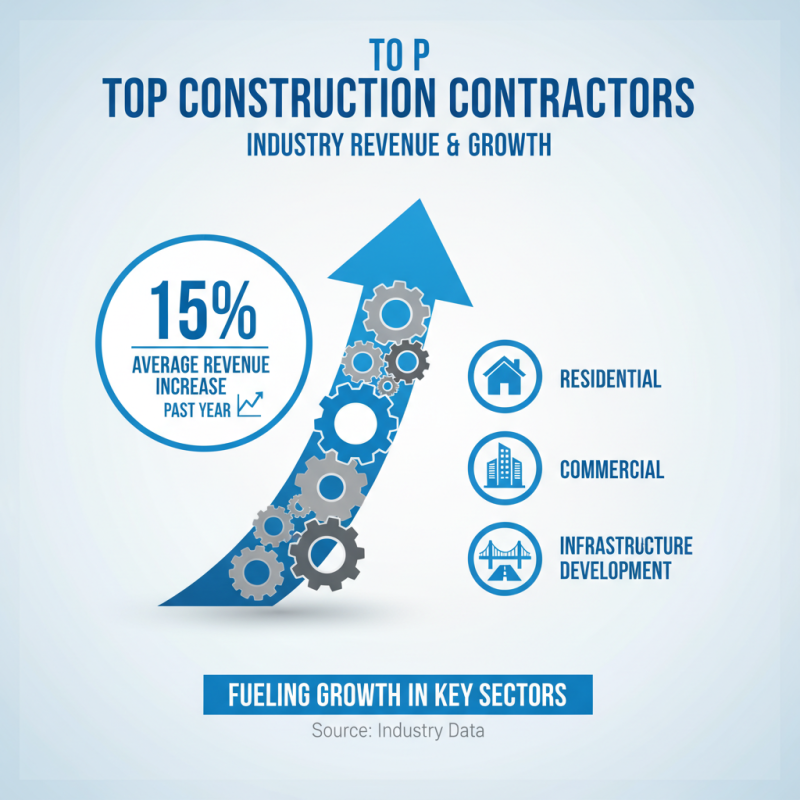
The construction industry is rapidly evolving. Recent reports indicate that the top contractors are seeing remarkable growth rates. According to industry data, the top firms reported an average revenue increase of 15% over the past year. This growth is fueled by strong demand in sectors like residential, commercial, and infrastructure development.
Many firms are capitalizing on the trend towards sustainable building practices. This not only meets client expectations but also adheres to regulatory changes. However, not all contractors evolve at the same pace. Some small firms struggle to keep up, facing challenges like skill shortages and increasing costs.
In the face of these hurdles, leading contractors often invest heavily in technology. They use advanced project management tools and building information modeling (BIM) to increase efficiency. Yet, this reliance on technology introduces new risks. Cybersecurity threats are a growing concern, with many firms inadequately prepared. Thus, as the industry grows, the need for a balance between innovation and risk management becomes crucial.
Criteria for Evaluating Contracting Firms in the Construction Sector
When evaluating contracting firms for construction projects, several key criteria come to light. Experience in the industry is paramount. Firms with at least five years of specialized experience tend to produce higher quality work. According to the Construction Industry Institute, projects led by experienced contractors see a 20% decrease in delays and a 15% reduction in costs.
Next, looking at the company's financial stability is crucial. A contractor with solid financial backing is less likely to face cash flow issues that could jeopardize your project. A creditworthiness analysis reveals that financially sound firms are three times more likely to meet project deadlines compared to those struggling financially. Reliable firms understand the importance of maintaining a healthy bottom line while also investing in quality materials and skilled labor.
Lastly, effective communication cannot be overlooked. Firms that establish clear channels of interaction are often more productive. A study from the Project Management Institute highlights that misunderstandings due to poor communication can increase project costs by at least 10%. Engaging firms that prioritize transparent communication can mitigate these risks significantly. Each of these factors requires careful consideration. Neglecting even one aspect can lead to unforeseen complications during the construction process.
Geographic Distribution of Leading Construction Companies in the U.S.
The geographic distribution of leading construction companies across the U.S. reveals insightful trends. Major cities often host top contractors, reflecting regional demands and expertise. Urban centers attract firms with
specialized skills. These contractors build skyscrapers, expansive commercial spaces, and essential infrastructure. In contrast, rural areas may see smaller companies that focus on residential projects.
Different regions emphasize varying construction types. The West Coast thrives with innovative projects, while the Midwest often focuses on manufacturing facilities. Southeast areas are known for residential developments. However,
fluctuations in demand can challenge contractors. Sometimes firms expand into new territories without sufficient local knowledge. This can lead to delays or miscalculations in project delivery.
Moreover, the impact of local regulations cannot be overlooked. Each state has distinct building codes, which require contractors to adapt their strategies. Working in unfamiliar regions can pose risks. A successful contractor knows when to rely on local partnerships. Building relationships with local experts can bridge gaps in knowledge and enhance project outcomes. The evolving landscape invites continuous learning and adaptation for all involved in the construction industry.
Emerging Trends Impacting the Construction Industry and Contractor Selection
The construction industry is evolving quickly. Emerging trends are reshaping how projects are conceived and executed.
Technology has become a central force. Building Information Modeling (BIM)
allows for better planning. Drones monitor job sites, ensuring projects stay on schedule.
Sustainability is another crucial trend. Clients increasingly demand eco-friendly practices. Contractors are adopting
green materials and energy-efficient designs. This shift complicates contractor selection.
It requires firms to invest in new training and resources.
Additionally, the workforce is changing. Skilled labor is becoming scarce. Hiring young professionals
with tech-savvy skills is essential. However, many contractors struggle to adapt to these shifts. They must reflect on their methods continuously,
ensuring they remain competitive. These factors impact how projects are awarded. Understanding these trends can guide
your contractor selection process.
Case Studies of Successful Projects by Top-Tier Construction Contractors
In the construction industry, successful projects often showcase the capabilities of top-tier contractors. A recent report by the Construction Industry Institute indicated that projects executed by highly-rated contractors see a 15% lower cost overruns compared to their peers. This statistic highlights how experience translates into efficiency, reinforcing the importance of selecting reliable teams.
One striking case study involved a mid-sized commercial building. The contractor implemented advanced project management software. This innovation cut scheduling conflicts by 20%. However, the project also faced challenges like labor shortages. A prolonged wait for materials led to delays and frustration. These experiences illustrate that even the best contractors encounter obstacles, demanding adaptability and strong communication skills.
Another study examined a large-scale infrastructure project, revealing that strategic partnerships can enhance outcomes. Collaborative approaches increased overall project sustainability by 30%. Yet, despite these successes, issues arose, such as misaligned stakeholder expectations. This emphasizes the need for thorough initial discussions to align all parties, ultimately improving project experiences.