
×

Top Blister Retail Packaging Suppliers for Global Buyers

For global buyers, selecting a blister packaging supplier is not simply a price comparison. Blister Retail Packaging must protect products, present them clearly, and survive long journeys. A well-made pack holds its shape on a crowded retail shelf. It also opens without frustrating the customer. These details often reveal more than a polished sales brochure. This guide introduces leading supplier types and explains what experienced procurement teams should inspect.

Reliable suppliers usually demonstrate practical control over forming, sealing, printing, and inspection. Buyers should ask about PET, PVC, and recycled-content options, depending on product needs and regional requirements. Sample packs can expose weak seals, cloudy plastic, rough edges, or inaccurate colors. Small flaws matter. They may increase returns or damage brand trust. Questions about tooling ownership, minimum order quantities, lead times, and corrective-action procedures also deserve clear answers. A factory tour, live video review, or recent quality report can strengthen confidence.

No supplier is perfect. A low-cost quotation may hide expensive tooling or slow revisions. A premium finish may add waste without improving protection. This overview compares capabilities, communication, certifications, sustainability practices, and delivery reliability across international suppliers. It also encourages buyers to test assumptions through prototypes and documented specifications. Regional experience can help, but it should not replace independent verification. The goal is practical judgment: choose a partner that can produce consistent Blister Retail Packaging and respond responsibly when requirements change.
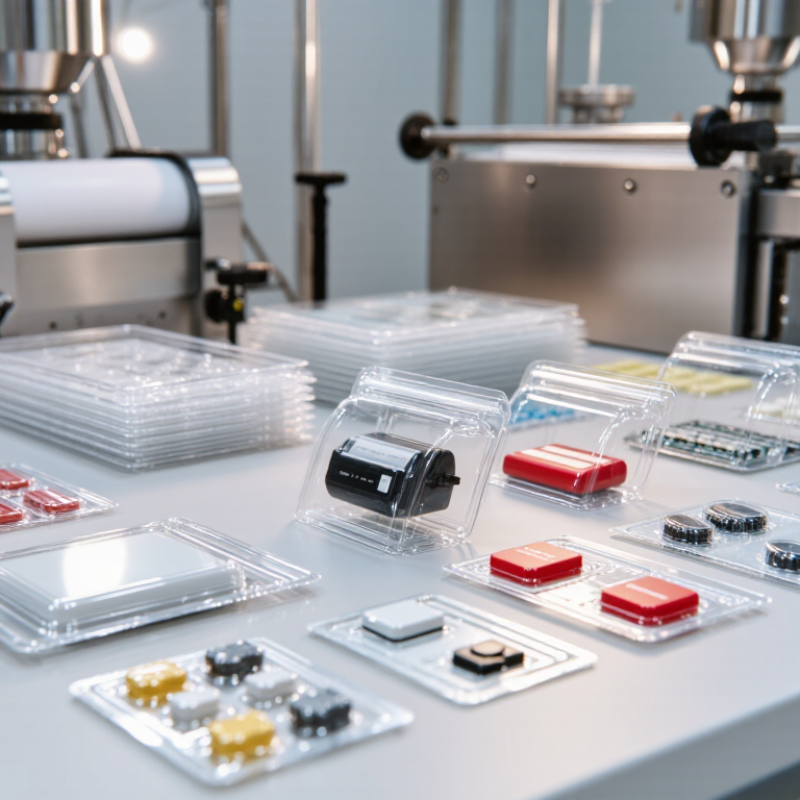
Top Blister Retail Packaging Suppliers for Global Buyers

Blister Packaging Formats and Materials: PVC/PVDC 200–500 μm, Foil 20–30 μm

For global buyers, blister packaging selection starts with barrier needs, forming performance, and product sensitivity. PVC/PVDC structures commonly range from 200 to 500 μm. PVC provides shape and rigidity, while PVDC improves resistance to moisture and oxygen. Thicker gauges may protect fragile items better, but they can increase material use and tooling pressure. The right choice depends on cavity depth, sealing temperature, and transport conditions.

Lidding foil typically measures 20–30 μm. Thinner foil can support efficient production, yet it may tear during handling or sealing. Thicker foil offers better puncture resistance and a more stable seal. Experienced packaging teams should check foil hardness, pinholes, coating adhesion, and seal strength. Laboratory testing matters. Real shipment trials matter more. One assumption deserves review: higher thickness does not automatically mean better protection. Excessive material can create forming issues and unnecessary costs.

Tips: Request complete thickness tolerances, not only nominal values. Confirm PVC/PVDC compatibility with the product and sealing equipment. Test samples after heat, humidity, vibration, and compression exposure. Inspect formed cavities for whitening, cracks, and uneven walls. Keep records from each production batch. Small variations can become visible problems later. A practical specification should balance barrier performance, machinability, sustainability goals, and regional recycling expectations. Some decisions may need revision after pilot production. That is normal, and it is better than discovering weakness after delivery.

Global Supplier Qualification: ISO 15378, ISO 9001, GMP, and AQL Standards

Global buyers should qualify blister packaging suppliers through documented systems, not polished samples alone. The ISO Survey 2023 reported 1,265,216 ISO 9001 certificates worldwide, showing broad adoption of quality management. Certification alone proves little. Buyers should verify its scope, expiry date, audit history, and relevance to pharmaceutical packaging.

ISO 15378 is more specific. It combines ISO 9001 with GMP principles for primary packaging materials. Auditors should inspect line clearance, artwork control, batch traceability, and change management. A practical visit may reveal labeled quarantine cages, calibrated vision systems, and clean production records. WHO GMP guidance emphasizes written procedures and controlled documentation. Small gaps matter. Missing signatures can signal weak discipline.

AQL sampling under ANSI/ASQ Z1.4 supports acceptance decisions, but it cannot replace process control. Buyers should define critical, major, and minor defects before production. They should also agree on inspection levels, sample sizes, and escalation rules. The 2023 ISO Survey indicates that certified systems remain widely used, yet certificate numbers do not measure defect performance. Suppliers should provide recent AQL results, complaint trends, corrective-action records, and temperature-controlled storage evidence.

One uncomfortable question remains: can the supplier prove consistency during peak demand, not just during an audit? Maybe not every supplier can.

Top Supplier Comparison: MOQ, Tooling Costs, Lead Times, and Capacity

Top Blister Retail Packaging Suppliers for Global Buyers

Supplier comparisons should begin with measurable commercial limits, not attractive samples. Smithers’ The Future of Global Packaging to 2028 values the worldwide packaging market above $1 trillion, increasing pressure on buyers to control waste, speed, and tooling risk.

For standard PVC, PET, or recyclable blister formats, a practical RFQ often shows MOQs between 10,000 and 50,000 units. Custom cavities may raise minimums substantially.

Tooling costs vary with cavity count, material, and forming method. A basic thermoforming tool may cost several hundred dollars, while precision multi-cavity tooling can reach several thousand. Ask whether engineering revisions, spare inserts, and tool storage are included.

Lead times commonly range from 3–6 weeks for stocked materials and 6–10 weeks for new tooling plus production. These are planning benchmarks, not promises. Reality can be less tidy.

Capacity needs closer inspection. A supplier quoting 500,000 packs monthly may lack enough reserved machine time during seasonal peaks. Request recent output records, line speed, defect rates, and changeover hours.

PMMI industry outlook reports repeatedly identify labor availability, automation, and shorter changeovers as major packaging investment drivers. That evidence supports comparing usable capacity, not installed capacity.

One overlooked detail: confirm whether quoted capacity includes inspection, packing, and export preparation. I have seen schedules fail there. Also check sample approval procedures, batch traceability, and documented quality controls before accepting the lowest MOQ.

Packaging Performance Testing: ASTM D4169, ISTA 3A, and Child Resistance

Global buyers often compare blister suppliers by price, tooling speed, and artwork support. Yet packaging performance deserves equal attention. A neat cavity can still fail after a rough delivery route.

ASTM D4169 helps teams model distribution hazards, including vibration, impact, compression, and handling stress. The selected assurance level and distribution cycle should match the actual shipping environment. Inspectors may record cracks, seal lifting, shifted cards, and product movement. Small details matter. However, ASTM D4169 results are not universal proof of performance. Different transit profiles need different test plans.

ISTA 3A examines packaged products under parcel delivery conditions. It can expose weaknesses caused by vibration, drops, and compression. For blister packs, review before-and-after photographs, seal measurements, and failure records. Child-resistant packaging requires a separate, user-focused evaluation. Test panels should reflect the applicable requirements in each target market. The package must resist access while remaining usable for responsible adults. A locking feature that frustrates every adult is not a practical success. I have seen teams focus too heavily on passing one test. That assumption needs correction. Ask suppliers for current reports, sample identification, conditioning details, and failure criteria. Also confirm whether the laboratory is independent and technically competent. No single test replaces a documented risk review.

Top Blister Retail Packaging Suppliers for Global Buyers

Packaging Performance Testing: ASTM D4169, ISTA 3A, and Child Resistance

This chart presents selected reference quantities from widely used packaging test frameworks. ASTM D4169 identifies distribution cycles numbered DC 1 through DC 18, ISTA 3A covers four packaged-product categories, and the U.S. child-resistant packaging protocol in 16 CFR §1700.20 specifies a minimum panel of 50 children for the child test.

Reference sources: ASTM D4169, ISTA 3A, and U.S. Code of Federal Regulations, 16 CFR §1700.20. The values are standard reference points, not supplier performance scores.

Sustainable Blister Options: rPET, PVC-Free Films, and EU PPWR 2025 Rules

Global blister packaging buyers are shifting toward lower-impact materials, but the material choice needs evidence.

The OECD’s Global Plastics Outlook reports that only 9% of plastic waste was recycled worldwide in 2019. That gap makes rPET attractive, especially for transparent backing trays and rigid blister components. However, recycled content can vary in color, clarity, and forming performance. A supplier should provide recycled-content certificates, batch records, and migration test results for the intended application.

PVC-free films, including PET, PP, and selected barrier structures, can simplify future compliance. Yet “PVC-free” does not automatically mean recyclable. Adhesives, coatings, inks, and mixed layers may still reduce recovery value.

Ask suppliers for material specifications, thickness tolerances, forming temperature ranges, and recycling-route evidence. Small details matter.

The EU Packaging and Packaging Waste Regulation 2025/40 entered into force in 2025. It moves packaging toward recyclability at scale from 2035 and sets recycled-content obligations for many plastic formats. Suppliers serving Europe should already map designs against these deadlines.

Eurostat reported approximately 186.5 kilograms of packaging waste per EU resident in 2022, showing why regulators are tightening requirements.

Compliance documents alone are not enough. A technically elegant blister may fail in real sorting systems. More pilot testing is still needed.