
×

China Top 10 Inverter Voltage Stabilizer Manufacturers?

Choosing among China’s top 10 Inverter Voltage Stabilizer manufacturers takes more than comparing prices. Buyers need to match the unit to their actual load, input-voltage range, and installation conditions. A workshop with a 15 kW motor, for example, may need a different response speed and overload capacity than a control room protecting sensitive instruments. Small details matter.

Power-electronics authority Dr. Bimal K. Bose has described power electronics as “the technology associated with efficient conversion, control, and conditioning of electric power.” That principle offers a useful lens for evaluating stabilizers: look beyond the nameplate and ask how the equipment handles voltage swings under real operating loads. Confirm rated capacity, phase configuration, correction range, response time, protection features, and service support. Ask for test records, too.

A clean specification sheet helps. Real operating data helps more.

This guide compares manufacturers by product range, customization, quality documentation, and after-sales capability. It also considers practical questions, such as whether a supplier can explain its capacity calculations or provide clear warranty terms. No ranking can replace site-specific engineering review, and published claims deserve verification. That caveat is easy to overlook. A lower quotation may still cost more if commissioning, spare parts, or technical support are unclear.
China Top 10 Inverter Voltage Stabilizer Manufacturers?

What Is an Inverter Voltage Stabilizer and How Does It Work?

An inverter voltage stabilizer is a power-conditioning device that keeps output voltage steady during unstable supply conditions. Unlike a traditional relay stabilizer, it does not depend mainly on stepped transformer taps. It converts incoming AC power into DC, smooths the energy through a DC link, and rebuilds AC power with an electronic inverter. A feedback sensor checks voltage many times per second. The controller then adjusts switching pulses to correct overvoltage, undervoltage, and minor waveform distortion.

The process is similar to rebuilding a rough road into a level surface. Input voltage may fall when motors start or rise during light loads. The inverter responds quickly, often with no mechanical switching delay. IEEE 1159-2019 classifies these events as power-quality disturbances, including sags, swells, interruptions, and harmonics. The IEA Electricity 2024 report forecasts global electricity demand to grow by an average 3.4% annually from 2024 to 2026. More digital equipment will make stable power increasingly important.

Performance still depends on design details. Efficiency, thermal control, overload capacity, and response time deserve careful testing. A stabilizer cannot repair damaged wiring. It cannot remove every harmonic either. That is the uncomfortable part. Poor grounding or an undersized unit may cause failure despite impressive specifications. IEC 61000-4-30 also emphasizes consistent power-quality measurement, so buyers should request tested input and output data, not vague claims. In practical use, a technician should record voltage fluctuations, load starting current, and ambient temperature before selecting capacity.

How China’s Inverter Voltage Stabilizer Industry Is Structured

China Top 10 Inverter Voltage Stabilizer Manufacturers?

China’s inverter voltage stabilizer industry is organized around several manufacturing layers. Large factories often integrate design, assembly, testing, and export services. Smaller specialists may focus on control boards, magnetic components, or customized enclosures. This structure supports flexible production, but quality can vary between suppliers.

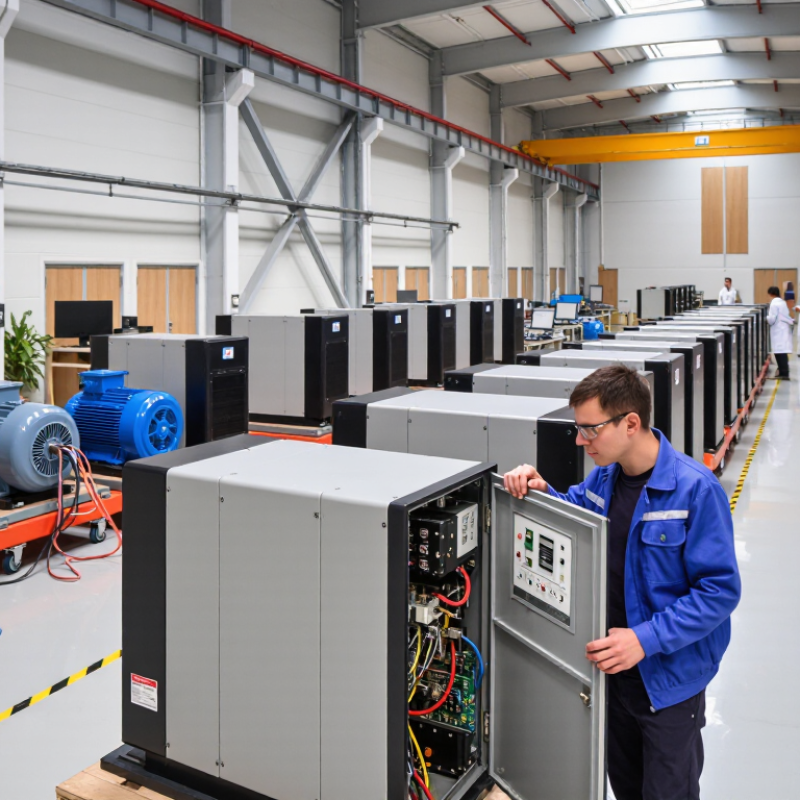
In factory evaluations, engineers usually inspect voltage accuracy, response time, thermal control, and overload protection. A reliable unit should remain stable during sudden load changes, such as motor startup or workshop equipment operation. Production lines commonly include aging tests, insulation checks, and simulated voltage fluctuations. These details matter more than a polished product catalog.

Many manufacturers operate through OEM and ODM partnerships. Their products may serve homes, medical facilities, data rooms, or industrial workshops. Export-oriented suppliers usually maintain documentation for international electrical requirements, although compliance claims still need independent verification. A certificate alone does not prove consistent production quality. That is an easy mistake.

Regional supply networks also shape pricing. Local access to transformers, circuit boards, sheet metal, and testing equipment can shorten delivery times. However, low pricing may reflect simplified components or limited testing. Buyers should compare sample results, warranty procedures, spare-part availability, and factory records. The “top 10” list should therefore measure technical capability, production consistency, and after-sales reliability, not only sales volume. Supplier rankings can change quickly.

Profiles of 10 Chinese Inverter Voltage Stabilizer Manufacturers

Profiles of 10 Chinese Inverter Voltage Stabilizer Manufacturers

China’s voltage stabilizer sector serves factories, homes, data rooms, and renewable-energy sites. The China Electricity Council reported 9.22 trillion kilowatt-hours of electricity consumption in 2023, up 6.7%. Demand is becoming more varied.

The first profile is a transformer-focused manufacturer, offering strong isolation for workshops. The second specializes in servo stabilizers for machining equipment. A third develops static electronic units with fast voltage correction. The fourth combines stabilizers with solar inverters and battery storage. The fifth supplies industrial UPS systems for data rooms. The sixth targets household appliances with compact single-phase products. The seventh designs three-phase systems for factories and pumps. The eighth supports railway and transport applications. The ninth focuses on medical facilities, where stable output and low electrical noise matter. The tenth operates mainly as an export and OEM supplier, adapting cabinets and control panels for regional standards.

IEA Renewables 2024 reported that China contributed nearly 60% of global renewable-capacity additions in 2023. This growth increases the need for coordinated voltage control, especially where solar output changes quickly. Buyers should inspect correction speed, overload capacity, thermal design, efficiency, and testing records. IEC 61000 electromagnetic-compatibility evidence is useful, but certification alone proves little. Field service matters.

Some catalogs look polished; field data is less complete. That is a weakness worth questioning. Real installations should be checked under motor starting, low voltage, heat, dust, and uneven loads.

China Top 10 Inverter Voltage Stabilizer Manufacturers? – Profiles of 10 Chinese Inverter Voltage Stabilizer Manufacturers
Profile Common Product Focus Typical Technology or Configuration Common Applications Specifications to Verify
Profile 1 Single-phase inverter voltage stabilizers Electronic voltage correction with inverter-based regulation; design varies by model Residential equipment, small offices, and single-phase loads Rated capacity, input-voltage operating range, output tolerance, overload behavior, and waveform quality
Profile 2 Three-phase stabilizers for industrial loads Three-phase regulation; models may use independent-phase or linked control Workshops, production equipment, and three-phase machinery Phase configuration, phase-balance limits, rated capacity, response time, and protection functions
Profile 3 Stabilizers designed for CNC and precision equipment Regulation and monitoring features selected for sensitive electrical loads CNC machines, testing instruments, and precision manufacturing systems Output-voltage accuracy, transient response, harmonic performance, and compatibility with the load
Profile 4 High-capacity industrial stabilizer systems Cabinet or floor-standing systems; capacity and cooling arrangement depend on the model Factories, centralized equipment rooms, and larger electrical installations Continuous-duty rating, cooling requirements, installation environment, bypass arrangement, and service access
Profile 5 Compact stabilizers for commercial equipment Space-conscious enclosures with model-specific control and protection features Retail systems, office equipment, and small commercial installations Dimensions, noise level, rated load, ventilation clearance, and connection method
Profile 6 Stabilizers for data and communication facilities Designed around the electrical requirements of connected power supplies and facility loads Network rooms, communication equipment, and related support systems Load compatibility, transfer or bypass behavior, grounding requirements, and coordination with UPS equipment
Profile 7 Stabilizers for pumps, fans, and motor loads Configuration must account for motor starting current and operating conditions Water pumps, ventilation systems, and other motor-driven equipment Starting-current capability, overload curve, motor compatibility, and protection against phase faults
Profile 8 Stabilizers for laboratory and testing environments Models may offer closer output monitoring and adjustable operating parameters Laboratories, inspection facilities, and electrical test benches Measurement accuracy, output stability, calibration information, and operating-range limits
Profile 9 Custom-engineered voltage stabilization systems Project-specific ratings, interfaces, and enclosure arrangements Special-purpose machinery and installations with defined site requirements Approved drawings, interface details, acceptance tests, warranty terms, and documented performance criteria
Profile 10 Export-oriented stabilizer product lines Product documentation and configurations vary by destination market and order Commercial and industrial installations supplied to overseas projects Applicable destination-market requirements, test reports, labeling, manuals, and after-sales support arrangements

This anonymized overview describes common product and application categories rather than verified profiles of specific companies. Actual ratings, performance, certifications, and available configurations are model-specific and should be confirmed against the manufacturer's current datasheet and test documentation.

How the Manufacturers Compare in Technology and Applications

China Top 10 Inverter Voltage Stabilizer Manufacturers?

Comparing ten leading Chinese manufacturers requires more than checking rated capacity. Their technologies differ in control speed, voltage accuracy, efficiency, and protection design. Many use DSP-based control with IGBT switching. This enables fast correction during voltage dips and surges. Some models respond within milliseconds, while others prioritize lower cost over faster regulation. That difference matters in factories with CNC equipment or sensitive automation systems.

Application fit reveals more than brochures. Data centers usually require low harmonic distortion, bypass functions, and continuous monitoring. Hospitals need stable output, alarm records, and careful isolation design. Telecom sites often value compact cabinets and battery compatibility. Workshops may prefer strong overload handling and simple maintenance. During site evaluations, engineers should check input fluctuations, ambient temperature, load imbalance, and cable distance. A laboratory rating may not reflect dusty floors or frequent motor starts.

Reliability depends on evidence. Look for documented testing, traceable components, thermal protection, and service response records. Efficiency above 95 percent sounds impressive, but measurement conditions must be clear. Published specifications can also be incomplete. I have seen products perform well at balanced loads yet struggle with uneven phases. That weakness deserves attention. Buyers should request sample test reports, installation references, and warranty terms before comparing prices. A cheaper cabinet is not always cheaper to operate.

What to Consider When Choosing a Chinese Manufacturer

China Top 10 Inverter Voltage Stabilizer Manufacturers?

When choosing among Chinese manufacturers, do not rank suppliers by website design or quoted price alone. The IEA’s Electricity 2024 report expects global electricity demand to grow by about 4% in 2024. This growth increases demand for dependable voltage protection in factories, data rooms, and commercial buildings.

Ask for measured performance under realistic loads. A proper test should record input voltage, output accuracy, response time, temperature rise, efficiency, and overload behavior. Request raw test sheets, not only certificates. IEC 60038 helps define nominal supply voltages, while IEC 61000-4-30 provides methods for measuring power quality. A capable manufacturer should explain how its stabilizer fits these requirements. Vague answers are warning signs.

Audit the factory if the project is important. Check transformer winding quality, control-board traceability, burn-in areas, calibration equipment, and spare-part storage. Samples should carry serial numbers matching inspection records. The World Bank’s Logistics Performance Index 2023 ranked China 19th globally, but national logistics performance cannot replace supplier-level verification. Delivery still needs written lead times, packaging specifications, and failure-response procedures.

I would also compare five-year operating cost, not purchase price. Low-cost units may use thinner conductors or smaller cooling systems. That assumption needs evidence. My checklist is useful, but imperfect; site measurements can expose problems that factory brochures hide. Ask for a witnessed load test before approving a large order.

China Top 10 Inverter Voltage Stabilizer Manufacturers: Key Selection Criteria

The chart presents a practical 100-point evaluation framework for comparing Chinese inverter voltage stabilizer manufacturers. Electrical performance, compliance, reliability, customization, and after-sales support should be assessed together rather than relying on price alone.