China Top 10 CNC Gundrilling Machine Suppliers?
Choosing a Cnc Gundrilling Machine supplier is not just a matter of comparing prices. Deep-hole drilling depends on machine rigidity, spindle performance, coolant delivery, and reliable chip removal. A small weakness can show up as a wandering bore, rough surface, or costly downtime. Buyers should also check whether the supplier offers installation, operator training, spare parts, and responsive technical support.
This guide to China’s top 10 CNC gundrilling machine suppliers is intended to help buyers compare those practical details. It looks at machine capabilities, customization, quality controls, and after-sales service—not simply polished catalogs. W. Edwards Deming, a leading quality-management expert, wrote, “Quality comes not from inspection, but from improvement of the production process.” His principle applies here: ask how a supplier controls manufacturing quality, rather than relying on a final inspection claim alone.
Request clear specifications, sample-bore results, and details about testing conditions. Ask how the machine handles your workpiece material, hole depth, diameter, and required tolerance. A showroom demonstration can be useful, but it may not reflect your production floor. No supplier is perfect. And a top-ten list is not a guarantee. Use it as a starting point, verify claims directly, and match each machine to the actual job.
How CNC Gundrilling Machines Enable Deep-Hole Production
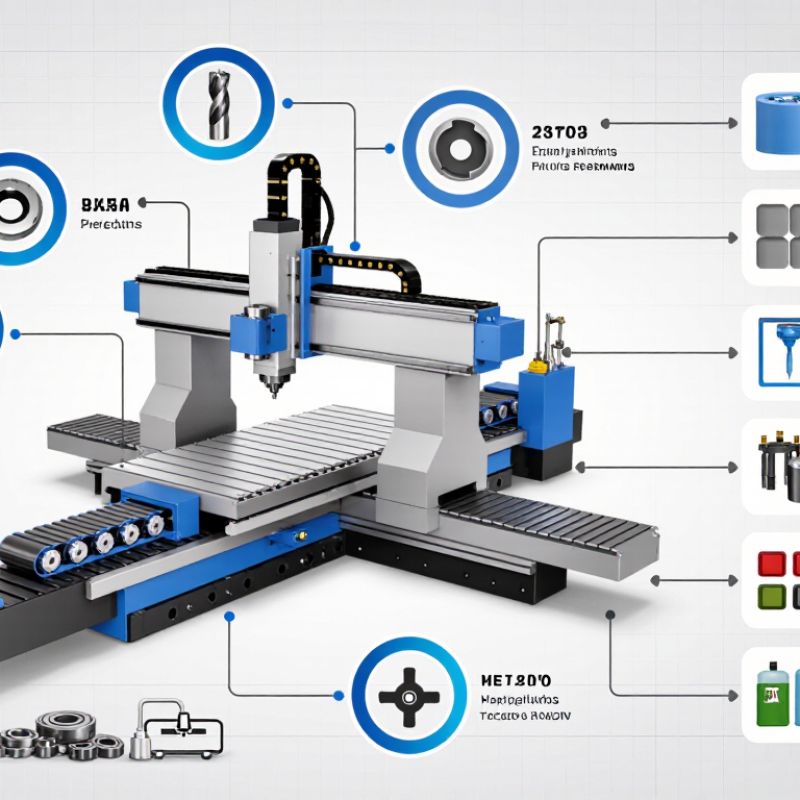
CNC gundrilling turns a difficult, slender bore into a controlled machining operation. A rotating cutting tool advances through the workpiece while filtered coolant flows through the tool, carrying chips back out. This matters when a bore must stay straight and consistent over a long distance. In suitable conditions, specialized deep-hole systems can handle depth-to-diameter ratios near 100:1, though this is not a universal guarantee. Material, tool condition, machine alignment, and coolant delivery all affect the result.
The process supports parts such as hydraulic components, injection-system bodies, and aerospace structures, where a small deviation can affect assembly or flow. A guide bushing helps stabilize the tool at entry; steady feed and chip evacuation help reduce wandering and surface damage. The details matter. Grand View Research valued the global machine tools market at USD 86.7 billion in 2023 and forecast a 5.7% compound annual growth rate from 2024 to 2030. That broad market figure signals continuing investment, but it does not prove that every machine suits deep-hole work. Buyers should check demonstrated bore straightness, diameter tolerance, coolant capacity, and sample-part results. A clean bore is not automatic. Even an advanced CNC setup needs careful process validation, and that step is easy to underestimate.
China Top 10 CNC Gundrilling Machine Suppliers? - How CNC Gundrilling Machines Enable Deep-Hole Production
| No. | Capability to Compare | Useful Data to Request | Why It Matters for Deep-Hole Production |
|---|---|---|---|
| 1 | Maximum drilling depth | Maximum depth in millimeters and the supported depth-to-diameter ratio for the quoted setup. | Deep-hole work is often defined by a depth-to-diameter ratio above 10:1; achievable ratios depend on the machine, tooling, material, and process conditions. |
| 2 | Drilling diameter range | Minimum and maximum supported hole diameters, with the recommended tool range for the target material. | Tool diameter affects chip formation, coolant delivery, rigidity, and the achievable hole quality. |
| 3 | Drilling process | Whether the machine supports single-lip gun drilling, BTA drilling, or both, and the applicable diameter ranges. | Single-lip gun drilling is commonly used for smaller deep holes; BTA systems are generally used for larger bores. The practical changeover point varies by setup. |
| 4 | Coolant delivery | Coolant pressure and flow specifications, filtration requirements, and compatibility with the proposed tool. | High-pressure coolant delivered through the tool helps carry chips out of the deep hole and supports tool cooling. |
| 5 | Workpiece capacity | Maximum workpiece length, diameter, weight, and clamping arrangement for the intended part. | Adequate support and secure clamping help control vibration and maintain alignment during long drilling cycles. |
| 6 | Spindle and feed performance | Spindle speed range, feed range, available torque, and the conditions used for published performance figures. | Suitable speed and feed settings depend on tool diameter, workpiece material, and coolant conditions; a single rating does not predict every application. |
| 7 | Hole accuracy and surface finish | Demonstrated straightness, diameter tolerance, and surface-finish results from a test using comparable material and hole geometry. | Results vary with material, tool condition, setup rigidity, and measurement method, so application-specific trial data is more useful than an unsupported general claim. |
| 8 | CNC control and automation | Axis configuration, programmable drilling cycles, tool monitoring, workpiece loading options, and available safety interlocks. | Automation can reduce manual handling and improve process repeatability when production volumes and part design justify it. |
| 9 | Chip and coolant management | Chip conveyor or collection method, tank capacity, filtration level, and coolant maintenance requirements. | Effective chip removal and coolant filtration support stable operation and help prevent chips from recirculating into the cutting zone. |
| 10 | Application support and verification | Availability of a sample-hole test, tooling recommendations, installation support, operator training, and spare-parts documentation. | A documented test on representative parts helps confirm cycle time, hole quality, and process suitability before production deployment. |
Note: Machine capabilities and achievable results vary by model, tooling, workpiece material, and process setup. Request application-specific test data when comparing suppliers.