×

How to Choose the Right Cement Mixer?

Choosing the right Cement Mixer affects concrete consistency, labor time, waste, and jobsite safety. It is not simply a matter of selecting the largest drum. A 160-liter mixer may suit small repairs, while a 300-liter model can support regular slab and foundation work. The correct choice depends on batch size, material type, power supply, transport needs, and mixing frequency.

Recent reports from Grand View Research and IMARC Group describe steady growth in construction equipment demand. Their findings point toward greater interest in portable, efficient, and lower-maintenance machinery. That trend sounds convincing, but market growth does not guarantee a suitable purchase. A mixer that looks powerful in a showroom may struggle on uneven ground or overload a weak electrical circuit. Check the rated output, drum capacity, motor protection, and spare-parts availability. These details matter more than polished photographs.

Concrete specialist Pierre-Claude Aïtcin wrote, “Concrete is the most widely used construction material in the world.” His observation highlights the importance of reliable production control. A mixer should rotate steadily, discharge cleanly, and maintain a workable mixture without excessive manual correction. OSHA and NIOSH guidance also stresses dust control, guarding, noise protection, and safe operating procedures around cement materials. Do not ignore them.

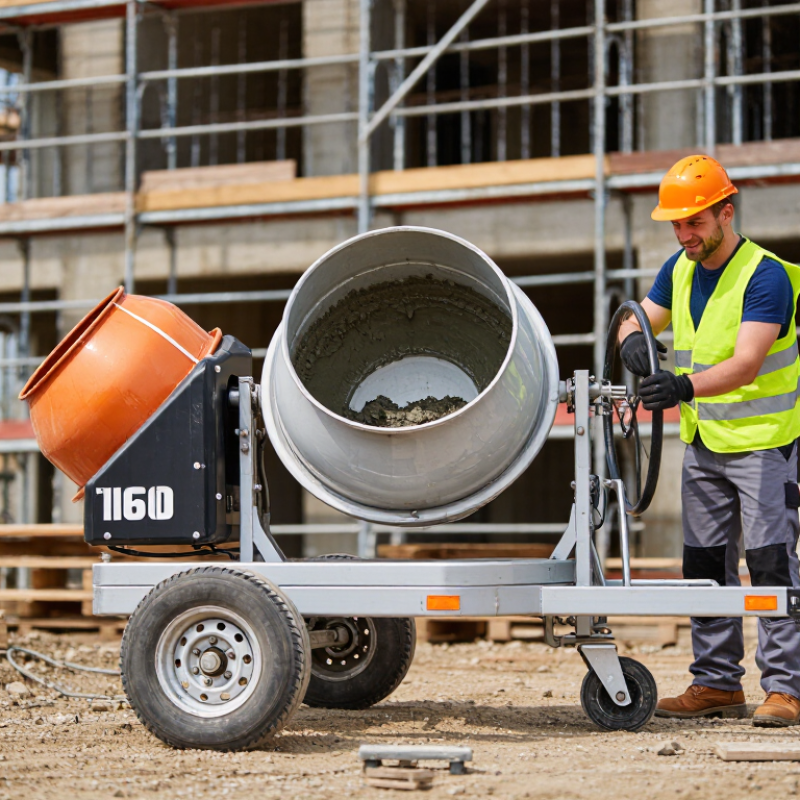
One practical lesson is easy to miss. Bigger is not always better. A smaller towable Cement Mixer may save fuel, storage space, and setup time. Yet choosing purely by price can create expensive downtime later. Compare real batch requirements with manufacturer data, then question your assumptions before buying. That final step is often overlooked.

How to Choose the Right Cement Mixer?

Define the Cement Mixing Requirements for Your Project

Choosing a cement mixer starts with defining the exact mixing requirements for your project. Identify the material, batch volume, mixing time, and required consistency. Concrete containing coarse aggregate needs more drum clearance than mortar or grout. Measure the aggregate size carefully.

Estimate your daily output before comparing mixer capacity. A small repair may need only several 20-liter batches, while a foundation requires steady production. Allow space for loading and discharge. A mixer that looks powerful on paper may struggle when overloaded. I learned this after filling a drum too quickly; the mixture turned uneven, and cleanup took much longer than expected.

Consider the worksite conditions as well. Check power access, ground stability, transport distance, and available ventilation. Electric mixers suit fixed sites with reliable power, while fuel-powered equipment may fit remote locations, subject to local safety rules. Match the mixing speed to the material specification, not personal preference. Faster is not always better.

Cleaning access also matters. Dried cement can reduce drum capacity and damage moving parts. Inspect the blades, frame, and emergency controls before each use. Keep a written batch record, including water quantity and mixing duration. The record may reveal small errors that are easy to miss during a busy pour.

Compare Mixer Types, Capacities, and Mixing Methods

How to Choose the Right Cement Mixer?

Compare Mixer Types, Capacities, and Mixing Methods

Choosing the right cement mixer starts with the material, job size, and available workspace. Drum mixers suit general concrete work, especially when aggregate must tumble evenly. Pan mixers provide more consistent blending for mortar, plaster, and stiff mixes. Continuous mixers can support steady production, but they require accurate material feeding and closer process control.

Capacity must match the planned batch, not the mixer’s advertised maximum. Never fill it fully. A 120-liter drum may produce only 80 to 90 liters of usable mix after allowing room for movement. Smaller batches often waste less material and reduce cleanup. Larger units save time on foundations or slabs, yet they need firm ground and enough power. Electric models work well indoors, while engine-driven mixers offer mobility but create noise and fumes.

Mixing methods also affect quality. Batch mixing allows each load to be adjusted by moisture and consistency. Continuous mixing keeps output moving, but a small change in sand moisture can alter the final mix quickly. Add water gradually, and measure it rather than guessing with a hose. Real sites are rarely perfect. Delayed deliveries, uneven aggregate, and tired operators can expose weaknesses in the setup. A mixer that looks efficient on paper may become awkward beside a narrow gate. Check drum access, cleaning time, discharge height, and emergency shutoff controls before choosing.

Evaluate Power Sources, Materials, and Operating Conditions

How to Choose the Right Cement Mixer?

Evaluate Power Sources, Materials, and Operating Conditions

Start with the power source, not the mixer’s advertised capacity. Electric models suit enclosed sites when a stable outlet and suitable circuit are available. Battery-powered units reduce cable hazards, but their runtime may fall during repeated heavy batches. For remote work, fuel-powered mixers provide useful independence, although ventilation, noise, and fuel storage require careful planning. Match motor torque to batch size and mixing frequency. A small motor may struggle with stiff, aggregate-rich concrete.

Material selection affects service life. A thick steel drum usually tolerates rough aggregate better than thin sheet metal. Check the frame, paddles, axle, and drum supports for rigid construction. Coated or corrosion-resistant surfaces help in damp environments, but coatings can eventually chip. The design should also allow easy cleaning. Hardened concrete left overnight can damage moving parts. I once underestimated cleanup time. That judgment was wrong.

Operating conditions often decide whether a mixer performs well. Measure doorway widths, ground slopes, turning space, and the distance to water and aggregate. Uneven ground can make loading uncomfortable and may increase tipping risks. In cold weather, mixes behave differently and motors work harder. Dusty sites demand more frequent filter and bearing checks. Before purchase, run a realistic test batch using your usual aggregate. Listen for unusual vibration and observe discharge control. Manuals matter, but field conditions matter more.

How to Choose the Right Cement Mixer? - Evaluate Power Sources, Materials, and Operating Conditions
Evaluation Dimension Available Options or Typical Range Best-Suited Conditions Selection Guidance Important Considerations
Power Source Manual, electric, gasoline, or diesel drive Manual units for occasional small batches; electric units for areas with reliable power; engine-driven units for remote or outdoor sites Fuel-powered mixers produce exhaust and should not be operated in enclosed or poorly ventilated spaces.
Electrical Supply Common single-phase systems: approximately 110–120 V or 220–240 V Worksites with a stable electrical connection and suitable circuit protection Confirm the mixer voltage, frequency, plug type, and available current before purchase. Use properly rated extension cords and avoid undersized cables, overloaded circuits, or wet electrical connections.
Motor or Engine Output Small mixers often use approximately 0.25–1.5 kW electric motors; larger units require more power Higher output is useful for heavier mixes, longer duty cycles, and larger drum capacities Rated power alone does not determine performance; drum design, gearing, load size, and mix consistency also matter.
Nominal Drum Capacity Approximately 60–400 L for common portable and site mixers Small repair work, residential projects, landscaping, and general construction Select capacity according to the required batch size, while keeping the actual load below the manufacturer’s stated limit. Nominal drum volume is greater than the practical mixing volume because the drum needs free space for proper tumbling.
Practical Batch Volume Often about 50–70% of nominal drum capacity, depending on the design and material Concrete, mortar, grout, and other cement-based mixtures requiring uniform circulation Overfilling can reduce mixing quality, increase motor load, and make discharge more difficult.
Drum Material Painted steel, galvanized steel, stainless steel, or heavy-duty polymer Steel for general construction; corrosion-resistant materials for frequent exposure to water or aggressive residues Choose a drum with adequate thickness and a smooth, durable interior surface. Steel drums are strong but may rust if damaged or left with wet concrete residue; polymer drums are lighter but may be less impact-resistant.
Frame and Support Material Welded steel, tubular steel, cast components, or reinforced composite parts Steel frames are suitable for frequent transport and demanding jobsite use Inspect weld quality, frame rigidity, axle strength, and leg stability. A rigid frame reduces vibration and helps maintain stable operation on firm, level ground.
Mixing Material Concrete, mortar, cement slurry, grout, plaster, and some aggregate-based mixtures Choose a mixer based on aggregate size, viscosity, and required homogeneity Very dry mixes, large aggregate, fibrous additives, or sticky materials may require specialized mixing equipment.
Aggregate Size Fine sand and mortar mixes to coarse aggregate commonly used in concrete Coarse aggregate requires sufficient drum opening, paddle clearance, and drive torque Check the permitted maximum aggregate size before using gravel or crushed stone. Aggregate that is too large can jam the drum, damage paddles, or produce an uneven mix.
Operating Duty Occasional, intermittent, or frequent continuous operation Light-duty models for short tasks; heavy-duty models for repeated batches throughout the workday Follow recommended duty cycles and allow electric motors to cool when required.
Drum Rotation Speed Many portable mixers operate at roughly 20–35 revolutions per minute under normal conditions Moderate rotation supports tumbling without excessive splashing or segregation Choose a mixer with a speed suitable for the material and drum diameter. Higher speed is not always better; excessive speed can cause spillage, uneven mixing, or premature wear.
Mobility Fixed base, two-wheel portable frame, or towable chassis Wheeled designs suit changing jobsites; fixed units suit dedicated production areas Consider wheel diameter, handles, ground clearance, total weight, and transport frequency. Do not move a mixer while the drum is rotating or while it contains an unstable load.
Terrain and Ground Conditions Level concrete, compacted soil, gravel, or uneven ground Stable, level surfaces provide the safest and most consistent operation Soft or sloped ground can cause tipping, uneven loading, and excessive frame stress.
Weather and Environment Dry indoor areas, covered outdoor areas, or exposed outdoor sites Electric mixers are suitable for dry locations; engine-driven units may suit remote outdoor work Protect the mixer from rain, standing water, extreme dust, and corrosive chemicals. Keep electrical components dry and avoid operating fuel-powered equipment where exhaust cannot disperse safely.
Noise and Emissions Electric drives generally produce fewer local emissions and less noise than combustion engines Electric mixers are preferable near occupied buildings, indoors, or in noise-sensitive areas Always comply with applicable noise, ventilation, and emissions requirements.
Cleaning and Maintenance Manual drum cleaning, lubrication points, belt inspection, bearing checks, and electrical or engine servicing All mixers require cleaning immediately after use to prevent hardened cement buildup Choose a design with accessible drum surfaces, replaceable wear parts, and clear maintenance instructions. Never use excessive impact force on the drum, and disconnect power before cleaning or servicing.
Safety Features Guarded belts and gears, emergency stop control, thermal overload protection, stable stands, and lockable controls Important for professional sites, repeated operation, and locations with multiple users Operators should wear eye protection, gloves, hearing protection where needed, and appropriate respiratory protection when dust is present.
Recommended Choice by Application Small electric mixer: approximately 60–120 L; medium site mixer: approximately 120–250 L; larger mixer: approximately 250–400 L or more Small repairs, residential construction, general site work, or higher-volume production Oversizing increases purchase, transport, and power costs; undersizing can cause overloading and low productivity.

Check Durability, Safety Features, Maintenance, and Mobility

How to Choose the Right Cement Mixer?

Durability begins with the drum, frame, and drive system. Choose thick steel, sealed bearings, and corrosion-resistant surfaces for repeated site work. A stable frame matters when the drum is loaded with wet concrete. The U.S. Bureau of Labor Statistics recorded 1,075 construction fatalities in 2023. This figure makes equipment stability and operator control practical concerns, not sales language. Check emergency stops, guarded gears, insulated controls, and clear operating instructions. OSHA highlights struck-by and caught-in hazards across construction workplaces. Keep hands, loose clothing, and tools away from rotating parts.

Mobility also deserves careful inspection. Large pneumatic wheels handle rough ground better than small solid wheels, but they can increase storage space. Confirm the handle height, brake response, lifting points, and total weight before purchase. On a crowded site, a mixer that turns poorly becomes a hidden hazard. Maintenance should be simple: grease points must remain accessible, belts should be visible, and the drum should rinse clean without trapped concrete. Manufacturers often promise long service life. Real dust, overloads, and rushed cleaning may disagree. I would rather choose a slightly slower mixer with accessible parts than a powerful model that is difficult to maintain.

Tips: Test the empty mixer before paying. Listen for grinding. Inspect welds and wheel hubs. Record each cleaning and lubrication task. Do not assume a safety guard is secure; check its fasteners regularly. BLS data is useful, but it cannot replace a site-specific risk assessment.

Select the Best Cement Mixer Within Your Budget and Workspace

Choosing a cement mixer starts with your budget and workspace, not the largest drum. The Global Cement and Concrete Association estimates that the world uses about 14 billion cubic metres of concrete each year. That scale hides a practical truth: small jobs often fail through poor handling, not weak machinery.

Measure your access route first. A narrow gate, low ceiling, or uneven floor can make a powerful mixer useless.

For repairs, garden paths, and small slabs, a compact electric mixer may reduce fuel costs and cleanup time. For repeated foundation work, choose a larger drum, but calculate its usable capacity at roughly 70–80% of the advertised volume.

Overfilling produces uneven mixing and strains the motor. It also wastes materials.

Operating cost deserves attention. The International Energy Agency reports that cement production creates about 7% of global carbon dioxide emissions. Better batching cannot solve that problem, but it can reduce discarded concrete.

I usually compare purchase price, electricity use, maintenance, transport, and expected working hours. I once chose a cheaper mixer with awkward controls. The saving disappeared after several slow batches. That mistake still matters.

Check noise, wheel stability, emergency shutoff access, and cleaning time before buying.

Your workspace should decide the machine’s size. Your workload should justify its cost.