
×

Top pH Meter Manufacturers How Do You Choose the Best?

Choosing among top pH meter manufacturers requires more than comparing prices, screen sizes, or promotional claims. A reliable Ph Meter should produce stable readings in the actual conditions of your laboratory, production line, classroom, or field site. Sample temperature, electrode quality, calibration frequency, and cleaning methods can change performance significantly. Small details matter.

Experienced users often begin with the application, not the brand name. A water treatment technician may need automatic temperature compensation and waterproof housing. A food producer may prioritize hygienic probes and simple documentation. Researchers may require high resolution, data logging, and compatibility with specialized electrodes. Look for manufacturers that publish technical specifications, calibration guidance, warranty terms, and replacement-part information. Independent reviews and established quality systems can also strengthen confidence, although marketing language deserves careful examination. Some instruments appear impressive but perform poorly with difficult samples or neglected maintenance. That is easy to overlook.

This guide examines how to evaluate Ph Meter manufacturers through accuracy, durability, support, and real-world usability. It considers measurement range, response time, electrode lifespan, software reliability, and service availability. Cost remains important, but the cheapest meter may create repeated calibration problems and hidden downtime. A more expensive model may be economical over several years. Still, no instrument is perfect. Your decision should reflect verified evidence, practical experience, and the risks of inaccurate measurements. The strongest manufacturer is the one that supports dependable results after purchase, not merely during the sale.
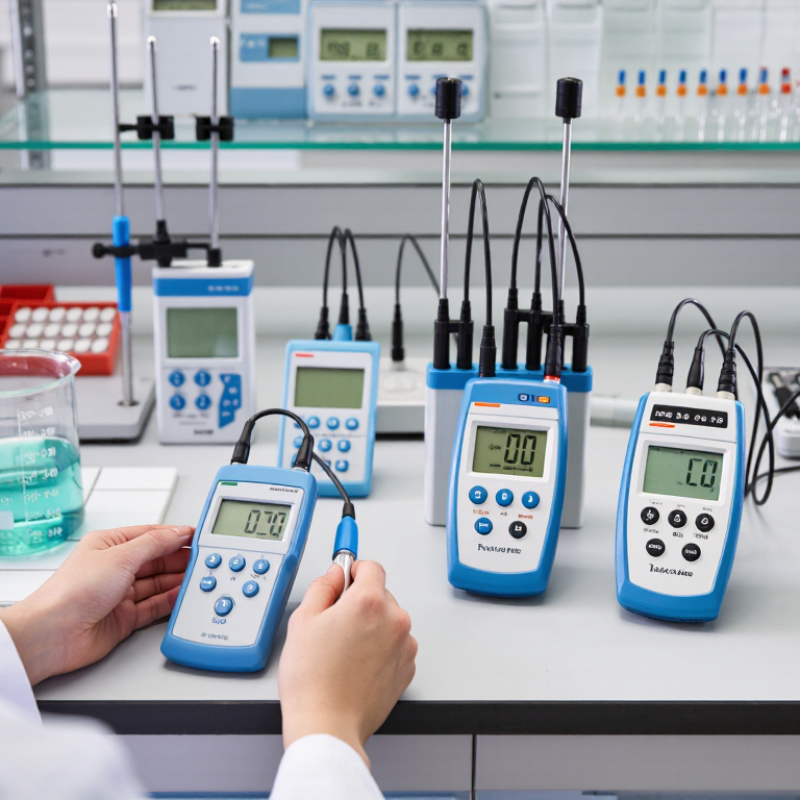
Top pH Meter Manufacturers How Do You Choose the Best?

What Is a pH Meter and Why Does Manufacturer Quality Matter?

A pH meter measures hydrogen-ion activity and expresses it on a logarithmic scale. One pH unit represents a tenfold change in hydrogen-ion activity. This makes small reading errors meaningful. U.S. EPA Method 150.1 requires calibration with at least two standard buffers that bracket the sample’s expected pH. ISO 10523:2008 also stresses temperature control, electrode condition, and documented calibration. Accuracy starts here.

Manufacturer quality matters because the display is only as reliable as the electrode, circuitry, and support behind it. ASTM E70-24 describes electrometric pH measurement and highlights calibration, temperature compensation, and maintenance controls. A well-built meter should respond steadily in a beaker, not jump when the probe moves slightly. Small errors accumulate. In routine laboratory work, clogged junctions, expired buffers, or poor storage can defeat expensive hardware. The uncomfortable reality is that users sometimes blame the meter before checking their method. Look for traceable calibration records, replaceable electrodes, clear uncertainty specifications, and service guidance based on these standards. A polished interface helps, but it cannot repair careless sampling.

Which Features Distinguish Leading pH Meter Manufacturers?

Leading pH meter manufacturers distinguish themselves through measurement control, not attractive housings. According to U.S. EPA Method 150.1, calibration should use at least two standard buffers that bracket the expected sample range. Strong manufacturers therefore provide stable calibration routines, clear slope readings, and automatic temperature compensation. Their electrodes should support NIST-traceable buffers and documented replacement intervals. Small details matter. A loose connector can ruin a careful test.

The 2024 ISO Survey reported more than 1.4 million ISO 9001 certificates worldwide, showing how widely documented quality systems are used. However, certification alone proves little about daily pH performance. Look for calibration records, uncertainty statements, and test data based on ASTM D1293 or equivalent procedures. Leading suppliers also design for real laboratories: readable displays, waterproof housings, replaceable probes, and data exports with timestamps. According to the U.S. EPA method, readings should stabilize before recording, so fast response must not replace stability. I would also question vague claims such as “laboratory accuracy” without defined conditions. That weakness is easy to miss. A genuinely reliable manufacturer explains temperature limits, sample handling, storage solution, and electrode aging in plain language.

Top pH Meter Manufacturers: How Do You Choose the Best?

Which Features Distinguish Leading pH Meter Manufacturers?

The chart shows the theoretical Nernst response of a glass pH electrode at different temperatures. The slope increases from approximately 54.19 mV per pH unit at 0°C to 64.11 mV per pH unit at 50°C.

Leading pH meters compensate for this temperature effect through automatic temperature compensation, reliable multi-point calibration, stable electrode diagnostics, and clear accuracy specifications. These features help maintain dependable readings across changing laboratory, industrial, water-treatment, and food-processing conditions.

How to Compare pH Meter Accuracy, Durability, and Ease of Use

Choosing a pH meter starts with accuracy, not the display size. The U.S. EPA Method 150.1 uses ±0.1 pH unit as a practical performance expectation for many water measurements. A reliable meter should support two- or three-point calibration, automatic temperature compensation, and stable readings after immersion. Check the calibration slope, too. A reading that settles quickly may still be wrong.

Durability appears in ordinary details. Look for a sealed housing, replaceable electrode, protected connector, and resistance to routine splashes. ASTM E70 describes potentiometric pH measurement, while ISO 10523 emphasizes controlled calibration, temperature, and sample handling. These details matter beside a wet bench. I once trusted a rugged-looking instrument with a dry reference junction. It failed before the casing did.

Ease of use should reduce operator mistakes. Large buttons help with gloves, but clear calibration prompts matter more. The meter should record slope, buffers, temperature, and time without forcing handwritten notes. According to USP <791>, pH measurements require suitable calibration and verification procedures, especially in controlled laboratory work. Do not accept “laboratory grade” as proof. Compare repeatability, electrode replacement cost, response time, and service records. A perfect specification sheet cannot rescue poor storage.

What Applications and Industries Require Different pH Meter Types?

Top pH Meter Manufacturers: How Do You Choose the Best?

Different industries demand different pH meter designs. Drinking-water teams often need portable, rugged instruments for field sampling. The U.S. EPA’s secondary standard places drinking-water pH at 6.5–8.5. This range requires dependable calibration and stable temperature compensation. A portable meter with an IP-rated housing suits treatment plants, wells, and inspection vehicles. However, field convenience can reduce laboratory-level precision.

Food processorsusually need meters that tolerate frequent cleaning and sticky samples. Flat-surface electrodes can measure sauces, cheese, and meat surfaces more effectively than standard glass bulbs. The Codex General Principles of Food Hygiene emphasizes hygienic equipment design and contamination control. Therefore, probes should be easy to rinse, sanitize, and inspect. Small mistakes matter.

Pharmaceutical laboratoriesrequire higher repeatability and documented measurements. USP General Chapter <791> describes pH measurement expectations, including calibration and electrode suitability. Benchtop systems often provide better stability, data records, and controlled temperature measurement.

Microelectrodes support tiny samples, while inline sensors help monitor continuous production streams. Wastewater facilities may prioritize automatic cleaning and long-term durability. ASTM D1293 also identifies standardized approaches for measuring water pH.

A meter can meet specifications yet still fail in real use. I have seen sampling technique, not hardware, create the largest error. Calibration frequency, sample temperature, electrode storage, and operator training deserve equal attention.

How to Choose the Best pH Meter Manufacturer for Your Needs

Choosing the best pH meter manufacturer starts with your testing conditions, not the catalog price. A food laboratory needs hygienic probes and repeatable readings. A wastewater team may need rugged housings, longer cables, and automatic temperature compensation. The WHO/UNICEF Joint Monitoring Programme reported in 2023 that 2.2 billion people lacked safely managed drinking water. This highlights the need for dependable field instruments.

Check measurement performance against recognized methods. ASTM E70 covers the electrometric measurement of aqueous pH. ISO 10523 also provides requirements for water quality testing. Ask manufacturers about calibration stability, buffer traceability, response time, and results at difficult temperatures. Their documentation should explain uncertainty, maintenance intervals, and electrode storage. Vague specifications are warning signs.

Service quality matters just as much. Confirm spare electrode availability, calibration support, training, and repair turnaround before purchasing. For drinking-water work, the U.S. EPA lists a secondary pH range of 6.5 to 8.5, so poor calibration can create unnecessary investigation. Test the instrument with fresh pH 4, 7, and 10 buffers when appropriate. I once treated a slow reading as a faulty meter; the real problem was a dried electrode. That mistake was avoidable. A manufacturer should help users diagnose such failures, not simply sell replacements. Consider a short trial with your actual samples. Clean water is easy. Dirty, hot, or highly saline samples reveal the truth.

Top pH Meter Manufacturers How Do You Choose the Best? - How to Choose the Best pH Meter Manufacturer for Your Needs

Evaluation Dimension What to Check Recommended Benchmark Why It Matters How to Verify Priority
Measurement Range Specified pH and temperature measurement limits. At least pH 0–14 for general laboratory use; broader ranges may be needed for specialized applications. A suitable range prevents measurements from falling outside the instrument’s rated operating limits. Review the technical data sheet and application-specific operating conditions. Essential
Accuracy and Resolution pH accuracy, displayed resolution, and temperature accuracy. Common laboratory instruments provide approximately ±0.01 pH accuracy and 0.01 pH resolution. Higher accuracy supports reliable quality control, formulation, and process decisions. Check independent test results, calibration records, and the stated measurement uncertainty. Essential
Calibration Capability Number of calibration points, buffer recognition, and calibration reminders. At least two-point calibration for routine work; three-point calibration is useful across a wider pH range. Correct calibration compensates for electrode slope and offset changes over time. Confirm supported buffer values, calibration procedures, and audit-trail functions. Essential
Electrode Compatibility Supported electrode types, connector standards, and replaceability. Compatibility with suitable glass, combination, refillable, or maintenance-free electrodes for the intended sample. Different samples may require specialized electrodes for viscosity, low conductivity, temperature, or chemical resistance. Request the compatible electrode list and confirm availability of replacement electrodes. Essential
Temperature Compensation Automatic or manual temperature compensation and temperature sensor support. Automatic temperature compensation with a defined operating range, commonly around 0–100°C depending on the probe. Electrode response and sample pH can vary with temperature, affecting measurement consistency. Check the temperature range, sensor type, and whether compensation is automatic or manual. Important
Sample Compatibility Performance with liquids, slurries, emulsions, low-ionic-strength samples, and viscous materials. The manufacturer should offer application guidance and suitable electrodes for the actual sample matrix. Sample composition strongly influences response time, fouling, stability, and electrode service life. Provide representative samples or descriptions during technical evaluation and request application data. Essential
Response Time and Stability Time required to reach a stable reading and the stability criteria used by the instrument. The supplier should state typical response behavior under defined sample and temperature conditions. Fast, stable readings improve productivity and reduce operator interpretation differences. Run repeatability tests using the same sample, electrode, temperature, and stirring method. Important
Durability and Protection Housing materials, water and dust protection, chemical resistance, and drop resistance where applicable. For wet environments, a documented ingress-protection rating and chemically compatible materials are preferred. Protection reduces downtime caused by spills, humidity, cleaning procedures, and routine handling. Review the protection rating, operating manual, warranty exclusions, and environmental limits. Important
Data Management Internal memory, time and date stamps, export formats, connectivity, and audit-trail features. Data storage and export should match the organization’s traceability and reporting requirements. Reliable records support quality management, repeatability reviews, and regulatory documentation. Test data export, user permissions, report generation, and compatibility with existing systems. Important
Compliance and Documentation Calibration certificates, operating instructions, quality-system documentation, and relevant conformity information. Documentation should be complete, current, traceable, and appropriate for the intended market and industry. Clear documentation simplifies validation, staff training, maintenance, and technical audits. Request certificates, declarations, manuals, validation materials, and document revision histories. Essential
Service and Technical Support Training, troubleshooting, repair capability, response times, and regional support coverage. Defined support channels, service procedures, and realistic response-time commitments. Technical support helps reduce measurement errors and minimizes operational interruptions. Ask for service-level details, escalation contacts, training options, and customer references. Important
Consumables and Spare Parts Availability of electrodes, storage solution, calibration buffers, junctions, batteries, and other parts. Essential consumables should have clear specifications, shelf-life information, and predictable availability. pH electrodes are consumable components, so long-term operating cost depends on replacement access. Review lead times, storage requirements, replacement intervals, and total cost of ownership. Essential
Total Cost of Ownership Purchase price plus electrodes, buffers, maintenance, calibration, repairs, training, and software costs. Compare the complete three- to five-year operating cost rather than the initial instrument price alone. A lower purchase price may result in higher long-term costs if electrodes or service are expensive. Build a lifecycle-cost model using expected test volume and replacement frequency. Important
Delivery and Customization Production lead time, minimum order requirements, packaging, labeling, and configuration options. Delivery commitments should align with installation schedules and inventory requirements. Predictable supply reduces project delays and supports consistent purchasing and deployment. Obtain a written quotation with lead time, included accessories, warranty terms, and acceptance criteria. Useful
Warranty and Risk Management Warranty period, coverage, exclusions, replacement policy, and product continuity. Warranty terms should clearly distinguish instrument coverage from electrode and consumable coverage. Transparent risk allocation helps control unexpected repair and replacement expenses. Compare warranty documents, return procedures, spare-part commitments, and product change notices. Essential