
×

What Is a 3D Sock Knitting Machine and How Does It Work?

A 3D Sock Knitting Machine makes a sock in a largely continuous process, shaping its tube, heel, and toe through programmed stitches. Rather than knitting a flat piece for later sewing, it forms the garment directly on the machine. The result can be a sock with fewer seams and a closer, more consistent fit. But “3D” does not mean every machine uses the same method.

Textile technology scholar David J. Spencer has written extensively about knitting technology. The line below is an editorial paraphrase of the engineering principle, not a verified verbatim quotation: “A knitted fabric takes its shape from the loops the machine forms.” That idea is useful here. Needles rise and fall, yarn feeders supply thread, and programmed controls guide stitch formation row by row. Small changes matter. A yarn tension setting or needle choice can affect stretch, texture, and fit.

This guide explains what a 3d Sock Knitting Machine is and how its main parts work together. It follows the process from yarn feeding to the finished sock, with practical details about machine controls and construction. It also notes a limitation: automation can improve repeatability, but it cannot make every yarn or design behave perfectly. A trial run still matters. A slightly uneven heel or loose toe can reveal what needs adjustment before production begins.
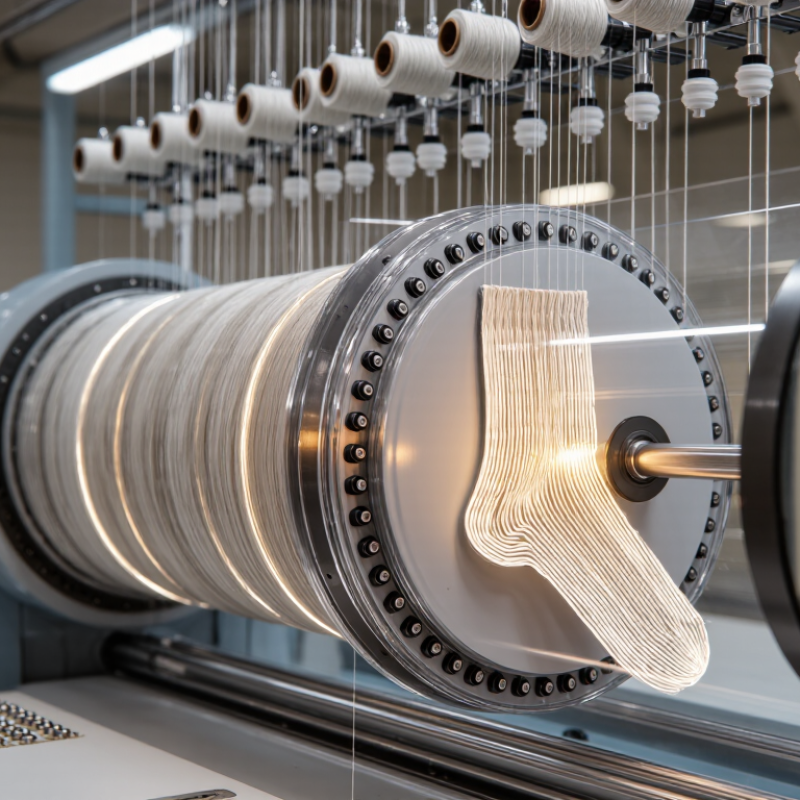
What Is a 3D Sock Knitting Machine and How Does It Work?

What Defines a 3D Sock Knitting Machine? Seamless, Shaped Fabric

A 3D sock knitting machine creates a sock in a shaped form rather than producing flat fabric for later sewing. Its cylinder carries many fine needles, which form loops around the sock’s circumference. Needle selection and yarn feed are coordinated as the machine runs.

The shape develops through changes in stitch formation. Around the leg and foot, the machine knits a tube; near the heel, it can vary needle activity to create a pocket that follows the foot. The toe is shaped by reducing or adjusting stitches, then closed according to the machine and production setup. The result is fabric designed to fit in three dimensions. No flat panels. Fewer bulky seams.

“Seamless” needs a little care. It usually describes the knitted body, not necessarily every finishing detail. Some socks still require a toe-closing step, and construction varies by equipment and design. This distinction matters when checking comfort or production claims. A smooth interior can reduce rubbing, but fit also depends on yarn, stitch density, and sizing. Even a well-shaped sock can feel wrong if those details are off. That is the part worth testing on an actual foot. These machines offer precise shaping, though they do not remove every design trade-off.

Core Components: Cylinder, 84–200 Needles, Yarn Feeders, and Controls

A 3D sock knitting machine forms a sock on a circular needle bed, often called a cylinder. Its 84–200 needles work in sequence, shaping the heel, foot, and toe without cutting separate fabric pieces. More needles can support finer fabric or more detailed patterns, but they do not guarantee a better sock. Cylinder diameter, yarn choice, and machine settings matter too. Yarn feeders guide different yarns to the needles; controls set stitch length, speed, and pattern changes. A small tension mismatch can leave a visible stripe or a tight, uncomfortable toe.

The ITMF’s 2023 International Textile Machinery Shipment Statistics reported that shipments of large circular knitting machines fell 16% to about 25,000 units. This figure covers a broader machine category, not sock machines alone. Still, it shows why buyers should compare machine specifications and intended output rather than rely on market headlines. Needles are only part of the picture.

Tips: Check that the cylinder needle count suits your target yarn and sock size. Run a short sample, then inspect the heel and toe under good light. Measure stretch after washing, too. A setting that looks right on the machine may not feel right on the foot.

Loop Formation: How Needles Build Fabric Course by Course

A 3D sock knitting machine builds fabric one course at a time. Each course is a row of connected loops. Needles rise, catch yarn from a feeder, and draw it through loops already held on their hooks. The old loops then slip off, leaving new loops in place. Small movements, repeated quickly. A sinker helps control the yarn and fabric, keeping the forming stitches steady as the needles move.

The machine changes which needles knit and how far they travel to shape areas such as the heel and toe. For a heel, selected needles may work back and forth across part of the sock, forming short rows while other stitches wait. This creates depth without sewing on a separate heel piece. The exact sequence depends on the machine and sock design. It is clever, though a loose yarn feed or worn needle can still leave a visible flaw.

Tips: Watch the fabric near the needle bed during a sample run. Even tension matters. If loops look uneven, check yarn feed and needle condition before changing the pattern. A small adjustment can help, but it may not fix every cause.

Heel and Toe Shaping: Needle Selection Creates Three-Dimensional Zones

A 3D sock knitting machine shapes a sock as it knits, rather than making a flat tube that needs extensive sewing. At the heel and toe, selected needles knit while others are held out of action. The active knitting width narrows or shifts, creating shaped sections. This is often done with short rows, which add fabric in one area without adding a full round across the sock. The result is a heel pocket or rounded toe formed from connected knitted loops. Not magic. Just controlled needle movement.

At the heel, the machine can work back and forth across part of the needle bed, then gradually bring more needles back into knitting. This builds depth where the foot needs it. Toe shaping often reduces the number of active needles in stages, drawing the fabric toward a narrower end. Exact methods vary by machine and sock design. Yarn tension, stitch length, and needle timing also affect the fit; needle selection alone cannot guarantee a smooth shape. A slight ridge or uneven transition may still appear, especially if settings or yarn behave differently than expected. That detail deserves a closer look during sampling.

What Is a 3D Sock Knitting Machine and How Does It Work? — Heel and Toe Shaping: Needle Selection Creates Three-Dimensional Zones
Knitting Stage Needle and Machine Action Fabric Formed Purpose
Leg and upper foot Needles knit in a circular sequence, forming a continuous tube. Mostly uniform tubular fabric. Creates the sock leg and the upper portion of the foot.
Heel shaping begins The machine selects a portion of the needles for knitting while other needles are held out of action. The active group works back and forth in rows. A heel pocket begins to form through short-row shaping. Adds depth at the heel instead of leaving the fabric as a simple tube.
Heel turns Needle selection changes progressively as the heel is knitted, with groups of needles brought into or taken out of work according to the machine program. A curved, three-dimensional heel cup. Shapes the fabric to fit around the back and underside of the heel.
Foot section The held needles return to knitting, and the machine resumes circular knitting across the sock. A tubular foot section connecting the heel and toe. Provides the main foot length; its dimensions depend on the knitting program and yarn.
Toe shaping Needles are selected in groups as the machine knits shaping rows or courses, narrowing the fabric toward the end of the foot. A tapered, three-dimensional toe section. Reduces the fabric circumference to shape the sock around the toes.
Toe closure The knitted toe is closed using the machine’s configured finishing method, which may involve linking or another closure process. A closed toe with a shaped end. Completes the sock and helps avoid an open tubular end.
Typical sequence for automated sock knitting. Needle selection, heel and toe construction, and closure methods vary by machine type, sock design, yarn, and programmed settings.

Production Sequence: Knit, Close the Toe, and Inspect the Finished Sock

A 3D sock knitting machine forms a sock as a shaped tube, rather than knitting a flat piece for later sewing. The needles build the cuff, leg, heel, and foot in sequence, while programmed changes control the fabric’s shape and density. The toe may be closed automatically on the knitting machine or on a separate toe-closing unit, depending on the production line. That transition matters. A poorly closed toe can feel bulky against the skin or unravel after wear.

After knitting, the sock is turned or positioned for toe closure, then checked under good lighting. An inspector looks for dropped stitches, uneven tension, holes, loose yarn ends, and a lumpy toe seam. Textile Exchange’s Materials Market Report 2024 estimates global fiber production reached 124 million tonnes in 2023. That figure describes the wider fiber market, not sock-factory waste, but it shows why careful material use deserves attention. A practical check is to stretch the sock gently and compare both sides for symmetry. Still, inspection is not foolproof; subtle tension changes can escape a quick visual check. That part is easy to overlook. A second check of the toe and heel can catch issues before packing.