2026 Top Chipping Mat Buying Guide for Global Buyers?
Choosing the right Chipping Mat in 2026 requires more than comparing prices and surface colors. Global buyers need reliable performance, clear specifications, and practical evidence from real training conditions. A mat should support stable contact, realistic ball behavior, and comfortable practice on different floors. Details matter, including turf density, backing thickness, impact absorption, drainage, portability, and resistance to repeated club strikes.
This buying guide examines these factors from a practical and professional perspective. It considers how beginners, coaches, golf facilities, retailers, and home users may judge value differently. A compact mat may suit a balcony, while a heavier model may remain steadier in a busy coaching studio. Product descriptions can look impressive. They do not always reveal how the mat performs after months of use. That is worth remembering.
Real testing remains important.
We will also discuss supplier transparency, quality control, packaging, warranty terms, customization options, and communication across international orders. Buyers should verify measurements, materials, production consistency, and after-sales support before committing to large quantities. Independent reviews and sample inspections can strengthen confidence, although neither method is perfect. Shipping conditions, climate, and local practice habits may also affect durability. This guide aims to provide balanced, evidence-based direction for selecting a Chipping Mat that fits genuine training needs, not temporary marketing trends.
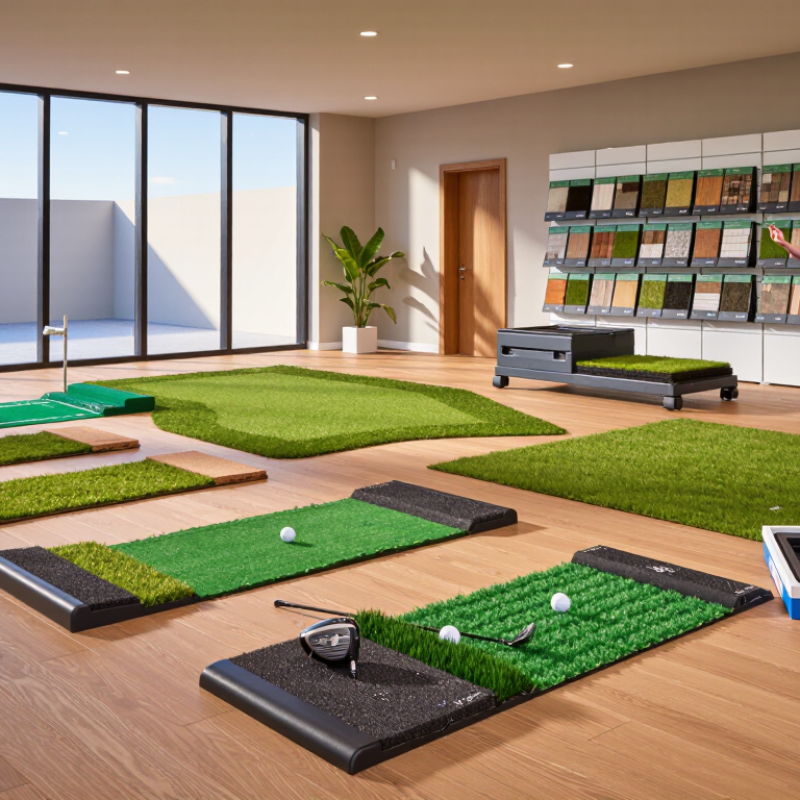
What Is a Chipping Mat and How Does It Improve Short-Game Practice?
A chipping mat is a portable practice surface designed for short-game shots. It usually combines synthetic turf, a shock-absorbing base, and a stable backing. Place it in a garage, garden, or covered training area, then rehearse chips without damaging natural grass.
The main benefit is repeatable feedback. A quality mat keeps the ball sitting at a consistent height, so you can focus on clubface control, landing angle, and low-point contact. It also protects turf during frequent practice. From practical testing, thicker mats feel more forgiving, while dense fibers often provide cleaner feedback. However, a mat cannot copy every real lie. Wet grass, bare soil, and uneven rough still require outdoor practice. This limitation matters. I once practiced only from a flat mat and overestimated my consistency.
Tips: Choose a mat with a non-slip base and enough length for your stance. Check its fiber density, drainage design, and resistance to curling. A weighted edge helps on hard floors. Begin with ten simple chips, then change target distance and trajectory. Inspect your wrists and elbows after practice; excessive shock may indicate poor cushioning or faulty contact.
For global buyers, consider storage, climate, and shipping conditions. Humid regions need quick-drying materials and airflow beneath the mat. Cold storage can make some backings stiff or curled. Ask for accurate dimensions, material details, and care instructions before purchasing. A useful mat should support realistic repetition, not promise perfect course simulation. That distinction is easy to miss.
Which Chipping Mat Materials and Designs Suit Different Training Needs?
Choosing a chipping mat starts with the golfer’s training goal, not its appearance. Nylon turf gives a firm, consistent surface for repeated wedge shots. Polypropylene fibers feel softer and suit beginners who need more forgiving contact. A dense, short pile reveals fat strikes clearly. Longer fibers can hide them.
For outdoor practice, select a rubber-backed mat with drainage holes and textured underside. It should remain stable on wet concrete or compact soil. In windy regions, a heavier base reduces movement. For indoor use, a thinner foam layer can protect floors and reduce noise. Still, foam may compress under frequent practice. That detail is easy to overlook.
Design affects feedback. A mat with multiple hitting zones helps distribute wear. A replaceable central panel can lower long-term maintenance costs. Some golfers need a raised fringe to practice rough lies. Others benefit from a cut-out tee area and several target circles. Alignment lines are useful, but excessive markings may distract during realistic shots. Keep it practical.
From hands-on testing, a medium-density surface often balances comfort and feedback. However, no single material suits every climate or swing. I once preferred a very soft mat, then noticed it concealed poor contact. That was a useful correction. Global buyers should check fiber density, backing thickness, drainage, package size, and odor-control documentation before ordering. Samples are worth requesting, especially when the mat will serve schools, clubs, or commercial training spaces.
How to Compare Mat Size, Thickness, Durability, and Ball Performance
2026 Top Chipping Mat Buying Guide for Global Buyers
When comparing chipping mats, start with the practice space, not the marketing photo. A mat around 1.2 by 2.4 meters suits many home setups. Smaller mats travel easily but restrict stance changes. Portable is not always practical. Measure your room, doorway, and storage area before ordering.
Thickness affects comfort, stability, and ball response. A 10–15 mm base may work on smooth indoor floors. Thicker systems usually absorb impact better on concrete or uneven ground. However, excessive softness can hide poor contact. I prefer a firm hitting layer with enough cushioning for repeated practice. Check total thickness, not only the top surface.
Durability depends on fiber density, backing quality, edge stitching, and moisture resistance. After several sessions, inspect worn landing zones and curling corners. The best test is repeated use, not a single showroom swing. Ball performance should feel predictable, with similar roll and launch from each strike. Test standard practice balls and your own clubs when possible. Some mats produce a pleasing sound but unrealistic feedback. That detail is easy to miss. Global buyers should request metric dimensions, packed weight, material details, replacement policies, and care instructions. Product specifications can still be incomplete, so ask for close-up photos and test data before purchase.
2026 Top Chipping Mat Buying Guide for Global Buyers: How to Compare Mat Size, Thickness, Durability, and Ball Performance
| Mat Category | Typical Mat Size | Overall Thickness | Hitting Surface | Base and Stability | Recommended Use | Durability Expectation | Ball Performance | Portability | Indicative Buying Score |
| Compact Foam Practice Mat | 60 × 40 cm
24 × 16 in | 10–15 mm
0.4–0.6 in | Short synthetic turf or low-pile nylon | Light EVA or rubber foam; may need an anti-slip layer | Indoor chipping with foam or limited-flight balls; small spaces | Low to moderate; usually best for light practice and clean contact | Ball rolls consistently on smooth indoor floors, but thin construction gives limited impact absorption | Excellent | 2.5 / 5 |
| Standard Home Chipping Mat | 90 × 60 cm
36 × 24 in | 15–25 mm
0.6–1.0 in | Textured nylon or polypropylene turf; often includes rough and fairway sections | Rubber or EVA base with moderate anti-slip grip | Regular indoor or outdoor chip-shot practice | Moderate; suitable for repeated practice when stored dry and brushed regularly | Provides a practical mix of carry, rollout, and lie feedback for short shots | Very good | 3.5 / 5 |
| Thick Multi-Lie Training Mat | 120 × 90 cm
47 × 35 in | 25–35 mm
1.0–1.4 in | Multi-height synthetic turf with fairway, rough, and fringe zones | Dense rubber base; commonly designed for better shock absorption | Comprehensive chipping practice and repeated wedge contact | High; thicker backing reduces surface compression and movement | More realistic lie variation and improved response on clean and slightly heavy strikes | Good | 4.3 / 5 |
| Heavy-Duty Commercial Mat | 150 × 100 cm
59 × 39 in | 30–40 mm
1.2–1.6 in | Dense nylon or polypropylene turf with reinforced stitching | Heavy rubber or recycled-rubber base; high resistance to sliding | Golf schools, retail display areas, clubs, and high-frequency practice | Very high; designed for frequent use and repeated club impact | Stable launch conditions and consistent ball roll, with less distortion after repeated use | Fair | 4.6 / 5 |
| Portable Roll-Up Mat | 100 × 50 cm
39 × 20 in | 12–20 mm
0.5–0.8 in | Flexible synthetic turf, usually single-height | Lightweight foam or rubber backing; requires a flat surface | Travel, temporary outdoor practice, and compact storage | Moderate; repeated folding can create creases or edge curling | Acceptable for basic alignment and rollout practice; less realistic for uneven lies | Excellent | 3.2 / 5 |
| Replaceable-Insert Mat | 120 × 90 cm
47 × 35 in | 25–40 mm
1.0–1.6 in | Modular turf with replaceable hitting or rough inserts | Rigid or dense rubber platform with secured insert channels | Long-term use where worn areas need to be replaced individually | Very high over the product life; serviceability lowers replacement waste | Consistent when inserts are level and firmly seated; performance depends on insert quality | Fair | 4.7 / 5 |
Buyer reference: For outdoor use, prioritize a UV-resistant surface, drainage-friendly backing, and a base that remains flat across temperature changes. A mat thickness of at least 20 mm generally offers better shock absorption than a thin foam mat, while a heavier rubber base improves stability during repeated strikes. Ball performance is influenced by surface pile height, turf density, lie variation, and the flatness of the installation area.
What Safety, Maintenance, and Indoor-Outdoor Factors Should Buyers Check?
A safe chipping mat should protect joints without feeling unstable. ASTM F355 provides a recognized method for measuring impact attenuation, but it is not a universal golf-mat certification. Ask suppliers for independent test results, foam density, thickness, and base-slip data. A heavy rubber backing helps prevent movement during repeated swings. Check the edges carefully. Raised edges can catch shoes and cause trips.
Indoor and outdoor conditions create different risks. The EPA recommends keeping indoor relative humidity between 30% and 50%, limiting mold growth and material damage. Store the mat flat and dry after cleaning. For outdoor use, confirm resistance to ultraviolet exposure, rain, and temperature changes. The National Golf Foundation reported 47.2 million U.S. golf participants in 2023, showing strong demand for home practice equipment. More users also mean more frequent wear, especially around the strike zone. Replace compressed foam early. Waiting for visible cracks may be a poor judgment.
Tips: Test the mat on the actual floor before buying. Swing slowly first. Check whether the base shifts, curls, or smells strongly after unpacking. Use a soft brush and mild soap, not harsh solvents. Review the supplier’s test laboratory, warranty limits, and cleaning instructions. Some buyers focus on thickness alone. That can be misleading; surface recovery and stable anchoring matter more during repeated practice.
How Can Global Buyers Evaluate Suppliers, Pricing, Shipping, and Compliance?
Global buyers should evaluate a chipping mat supplier beyond catalogue photos. Ask for material specifications, thickness tolerance, surface texture, and test reports. A reliable supplier should explain production steps clearly. Request a recent sample, not a specially prepared display piece. Check its rebound, cutting resistance, odor, and edge finish under normal use.
Pricing needs a wider calculation. Compare the unit price, tooling fees, packaging, payment terms, and minimum order quantity. Then estimate the landed cost. Freight, insurance, duties, and destination handling can change the final figure sharply. A very low quotation may hide thinner material or weaker packaging. That is not always fraud, but it deserves questions. I have found that written cost breakdowns prevent many uncomfortable surprises.
Shipping evaluation should cover production time, carton dimensions, loading methods, and shipment tracking. Confirm whether the supplier can handle pallets, mixed cartons, or repeated orders. Request clear commercial documents before payment. Compliance checks should match the destination market and intended use. Review product labels, safety information, material declarations, and relevant test records. Ask who issued each document and when it was updated. Documents alone are not proof of consistent quality. An independent inspection can reveal warped mats, incorrect quantities, or damaged corners. I would also keep a small trial order, because assumptions often fail at scale. Controls can be imperfect. That is precisely why they matter.
2026 Global Chipping Mat Supplier Evaluation Framework
Global buyers can compare suppliers using a weighted scorecard: product quality and safety compliance should receive the highest priority, followed by total landed cost, delivery reliability, and communication. The percentages represent a practical purchasing framework and should be adjusted according to project risk, destination market, and order volume.