2026 Best CNC Milling Service for Global Buyers?
For global buyers, choosing the best CNC Milling Service in 2026 means evaluating more than price. A supplier must control accuracy, material traceability, communication, and delivery risk. According to Fortune Business Insights, the global CNC machine market was valued at approximately USD 83.99 billion in 2023. It may reach USD 128.86 billion by 2032. This growth reflects stronger demand for automated, repeatable, and digitally connected manufacturing.
Quality still decides the outcome.
A dependable CNC Milling Service should explain its process clearly. Buyers should review machine capability, tolerance records, inspection equipment, and production experience. ISO 9001 certification can support process consistency, while AS9100 may matter for aerospace-related work. However, certification alone is not proof of excellent parts. A real supplier should provide inspection reports, material certificates, sample photos, and clear corrective-action procedures.
Deloitte’s 2024 Smart Manufacturing and Operations Survey reported that many manufacturers view smart manufacturing as a major competitiveness driver. This finding matters because modern milling depends on stable data, fast feedback, and disciplined process control. McKinsey’s manufacturing research also connects digital production with improved productivity and reduced downtime. Yet these benefits are not automatic. Some suppliers advertise advanced equipment but offer weak engineering support. That gap deserves attention.
Look closely.
In this 2026 guide, global buyers will compare machining accuracy, supported materials, surface finishes, lead times, communication systems, and total landed cost. Experience suggests that the cheapest quotation can become expensive after revisions, delays, or rejected parts. A more reliable decision considers technical fit, evidence, and long-term cooperation. No supplier is perfect. The best choice is the one that identifies risks early and responds honestly when assumptions fail.
What Defines a CNC Milling Service in 2026?
2026 Best CNC Milling Service for Global Buyers?
What Defines a CNC Milling Service in 2026?
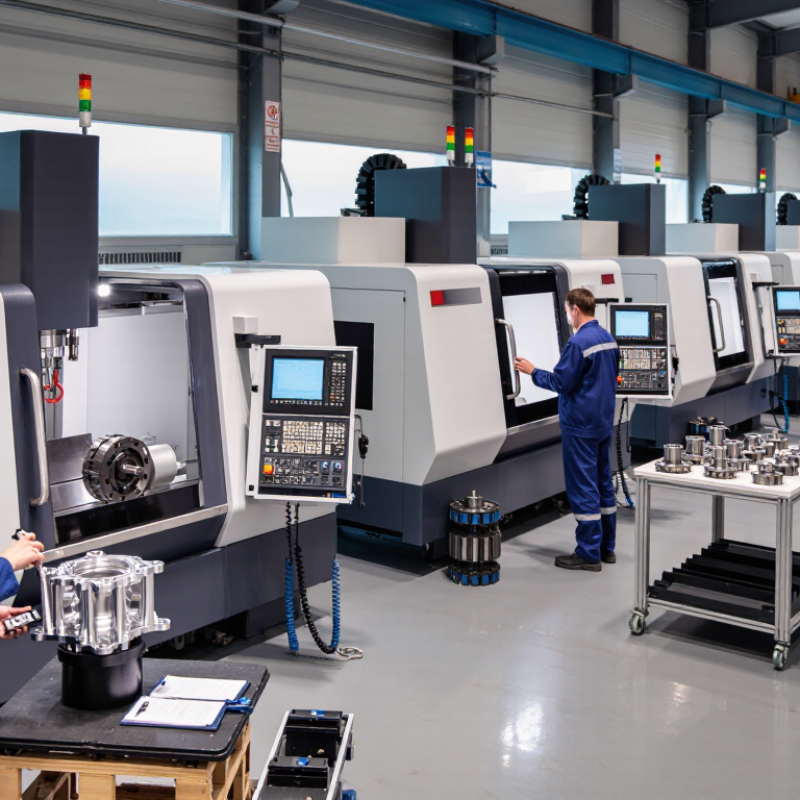
A capable CNC milling service does more than cut metal from a digital file. It interprets drawings, checks tolerances, and identifies manufacturing risks before machining begins. In practice, reliable teams review datums, wall thickness, tool access, and material condition. They also explain when a requested tolerance adds cost without improving function. That conversation shows real engineering judgment.
Global buyers now expect traceable quality and predictable communication. A dependable service should provide material certificates, inspection records, first-article measurements, and clear revision control. Modern equipment matters, but process discipline matters more. Five-axis machining can reduce setups, while probing systems help verify critical features during production. Still, technology cannot fix an unclear drawing. I have seen small wording errors create avoidable delays, even in well-managed projects.
Tips: Send a complete 3D model and marked drawing. Identify critical surfaces, cosmetic areas, and inspection standards. Ask how rejected parts are handled. Request a sample inspection report before placing a large order. Compare total risk, not only the quoted unit price. The cheapest quote may hide weak communication or repeated rework. No supplier is perfect. A trustworthy partner admits uncertainty, records corrections, and improves the process after each project. That honesty often matters more than polished sales language.
2026 Best CNC Milling Service for Global Buyers?
What Defines a CNC Milling Service in 2026?
Material expertise is a practical benchmark when comparing CNC milling services. The chart shows typical nominal densities for widely machined materials, helping global buyers evaluate part weight, shipping requirements, tooling considerations, and material selection. Actual values vary by alloy, grade, and supplier specification.
How Global Buyers Should Evaluate CNC Milling Providers
How Global Buyers Should Evaluate CNC Milling Providers
Choosing a CNC milling provider requires more than comparing hourly rates. Experienced buyers review sample parts, inspection records, and production communication. Ask whether the provider can hold your required tolerances consistently, not only on one successful prototype. A clear drawing review is essential. It should identify datums, surface finishes, material grades, and critical dimensions before machining begins.
Tips: Request a small trial order. Check the actual parts with a calibrated measuring report. Confirm material certificates, packaging methods, export documents, and realistic lead times. A reliable provider should explain risks before accepting the job. Fast replies are useful, but precise replies matter more.
Global projects also need dependable process control. Ask how tools are monitored, how revisions are managed, and what happens when inspection results fail. Photos of setups can reveal practical details, such as fixture stability or chip buildup. However, photos are not proof of capability. I have found that some suppliers describe tolerances confidently but provide weak measurement evidence. That is a warning, even when the quotation looks attractive. The best evaluation combines technical knowledge, direct experience, and documented quality records. Pay attention to small inconsistencies. They often become expensive delays.
Which Materials, Machines, and Tolerances Are Available?
2026 Best CNC Milling Service for Global Buyers?
Which Materials, Machines, and Tolerances Are Available?
Global CNC milling buyers usually compare three things: material capability, machine control, and achievable tolerance. Aluminum is fast and economical, while stainless steel needs slower cutting and better coolant management. Engineering plastics reduce weight, but heat can distort thin walls during machining. Copper alloys demand sharp tools and careful chip evacuation. For hard steels, rigid five-axis equipment and controlled feeds are often necessary.
A capable supplier may use three-axis, four-axis, or five-axis mills. Three-axis machines suit flat plates and straightforward pockets. Rotary or five-axis machining reaches angled surfaces with fewer setups. That matters. Fewer setups can reduce alignment errors. Typical commercial tolerances may reach ±0.01 mm for selected features, but not every surface. Tighter requirements, such as ±0.005 mm, need temperature control, calibrated probing, and process verification. Hole position, flatness, and surface finish should be specified separately. A drawing that says “tight tolerance everywhere” is expensive and unclear.
In one production review, a prototype met size limits but failed assembly because burrs were ignored. That was avoidable. Ask for first article inspection, material certificates, dimensional reports, and traceability. I would also request sample photos and a realistic tolerance map before production. Perfect repeatability is not automatic. It depends on design, material, tooling, temperature, and inspection discipline. Even experienced teams sometimes underestimate thin-wall deformation. Revising the design early may save more money than chasing an impossible tolerance.
How Pricing, Lead Times, and International Shipping Work
2026 Best CNC Milling Service for Global Buyers?
A competitive CNC quote includes more than machine hours. It covers material, setup, tooling, programming, inspection, surface treatment, and packing. In practice, aluminum parts may quote faster than stainless steel parts, especially with tight tolerances. A clear drawing reduces revisions. So does a complete 3D file.
Public pricing reports rarely show one universal CNC rate. They usually identify labor, energy, and material costs as major manufacturing drivers. Buyers should request a line-item quote, not only a unit price.
My estimate can still miss hidden fixtures or secondary finishing. That is an uncomfortable, but useful, warning.
For small batches, setup costs can exceed cutting costs. Larger volumes spread them across more parts.
Lead times often include design review, production, inspection, and transport.
A practical schedule may allow five to fifteen business days for machining, excluding complex finishes. Air shipping may take three to ten days. Ocean freight can take twenty-five to forty-five days, depending on routing.
UNCTAD’s Review of Maritime Transport 2024 reports that over 80% of global trade by volume moves by sea. The World Bank’s 2023 Logistics Performance Index compares 139 economies, highlighting customs and delivery reliability as key variables.
Buyers should provide the destination postal code early. Duties, taxes, broker fees, and document checks can change the landed cost.
Shipping estimates are not promises. They need buffer.